
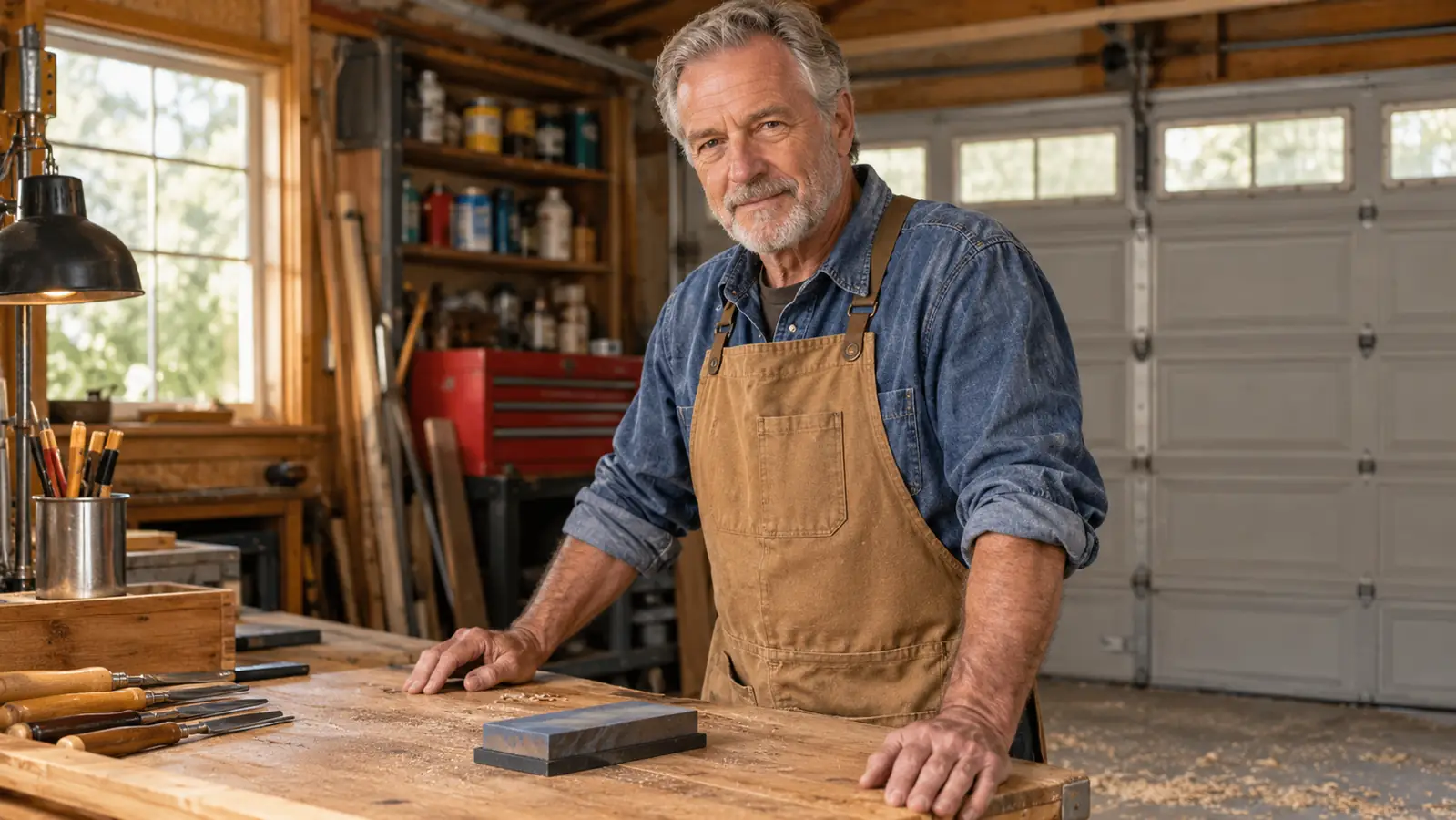
I spent 34 years hanging trim and setting cabinets, and for most of that time my sharpening was whatever the job site allowed. A worn-out hardware store stone, a sheet of sandpaper taped to a glass offcut, a whole lot of swearing. When I retired four years ago and started building furniture out here in the garage, I rebuilt my hand tool kit in the first winter and put a Norton oil stone on the bench. That was three years ago. It has sharpened every chisel and every plane iron I have touched since, and I have not once wished for something else.
People ask me about diamond plates and fancy water stones, and I get it. Those are good tools. But there is a reason the Norton combination oil stone is still the one clamped to my bench, and it is not nostalgia. Here are ten of them.
The one stone on my bench for three years running
An 8 by 2 by 1 inch combination bench stone in corundum, coarse 100 grit on one side and fine on the other. It is the Norton oil stone I sharpen chisels and plane irons on.
Amazon Check Today's Price on Amazon →Two grits in one stone, so you never stop to swap
The coarse 100 grit side repairs a nicked edge. The fine side hones it to a working polish. That is the whole sequence, and it happens on one 8 inch stone sitting still on the bench. I do not have to unclamp anything, find the other plate, or re-establish my angle. If you have ever dropped a chisel on a concrete floor and spent the next twenty minutes hunting for the right grit, you know why this matters.
Oil stays put and keeps the swarf off your edge
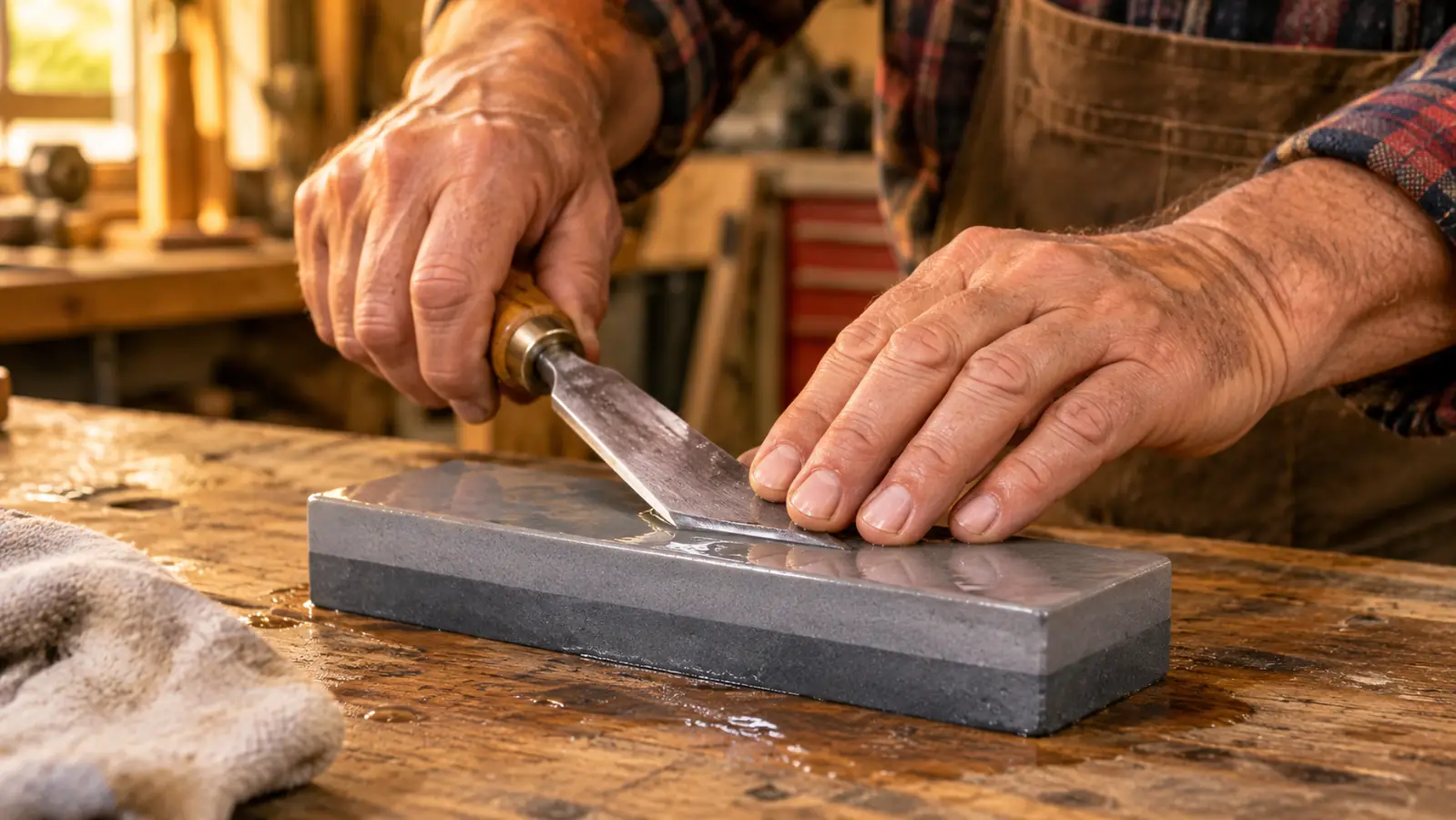
You lubricate this stone with a light honing oil, never water. The oil does two jobs. It floats the metal particles up so they do not load the surface and dull the edge you are working on, and it stays where you put it. There is no tray to fill, no stone to soak, no clock to watch. I keep a small bottle on the bench, give the surface a film, and get to work.
It does not dish out the moment you lean on it
A hard corundum stone holds its flat reasonably well. I check mine for flatness once in a while against a straightedge, and in three years it has stayed honest enough that I have never had to true it. Soft water stones cut faster and feel lovely, but they hollow in the middle and then you need a flattening plate to fix them. That is another tool, another purchase, another thing to store.
It handles a chisel the same way it handles a plane iron
The 8 by 2 by 1 inch footprint is a bench stone, and that is how I use it, on every edge tool in the shop. So do my pocket knife and a pair of shop scissors. One stone, one bottle of oil, one small corner of the bench, and everything with an edge in this house gets handled.
The edge suits furniture work better than a polished bevel
A chisel off a fine oil stone has a slight tooth to it. That is not a defect. For paring end grain and chopping joints in cherry and walnut, that tooth bites and holds. I hone at 30 degrees on the 25 degree bevel the chisel came ground to, finish on a leather strop, and the edge does what I ask. A mirror polish looks impressive in a photograph and does not cut dovetails any better.
Nothing to soak, nothing to freeze, nothing to crack
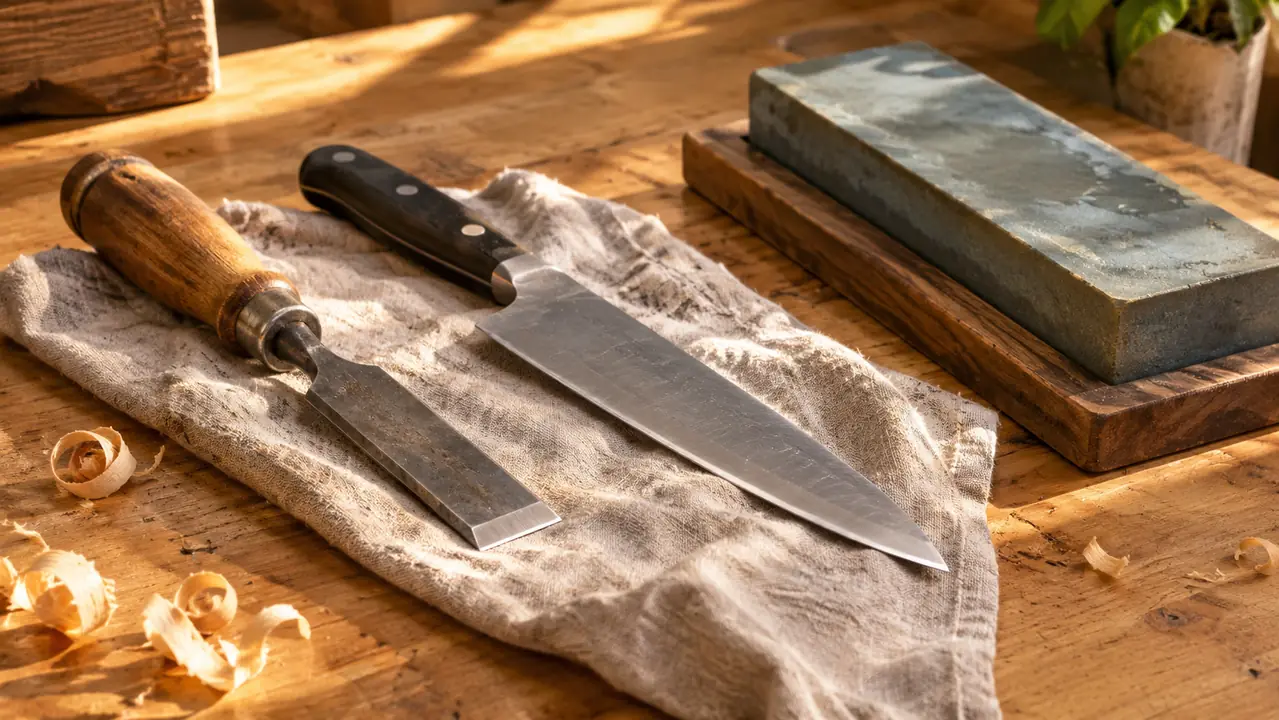
My shop is a two car garage with a concrete floor and one small electric heater. It gets cold out there in an Idaho winter, and dry. A stone that lives in a bucket of water is a stone I have to think about. The Norton stone sits on the shelf, gets a film of oil when I use it, and does not care what the thermometer says. That reliability is worth more to me than a faster cut.
It rewards a honing guide instead of punishing one
I use a simple side clamp honing guide. It is not fancy, and on a hard stone it tracks true instead of digging in. On a very soft stone the roller can sink and your angle wanders without you noticing. Because this stone is hard, my bevel comes out consistent enough that I can feel the difference on the wood. Consistency is the whole game with sharpening.
The cost per year is close to nothing
I have owned this one stone for three years and it is nowhere near worn out. Compare that to a chisel I bought in the same winter, which is a tool I will use for decades, or to the recurring cost of abrasives. It is a tool you buy once and then stop thinking about. I am not going to quote you a figure because prices move, but look at today's price and divide it by the years you will own it.
It teaches you what a sharp edge actually feels like
Every tool helped me on the first project after I set it up, and the stone was no different. What I did not expect was how much it taught me. Working a bevel by hand on a stone you can feel through your fingertips tunes your sense of angle faster than a machine that does the thinking. Three years in, I can tell when an edge is close by the sound and the drag alone.
Nothing to plug in, nothing to break, nothing to update
There is no motor, no cord, no switch, no reservoir. It is a piece of corundum in a plastic case, and the case is the only part that could fail. If the power goes out in a storm, I can still sharpen. In a garage shop where every square foot is contested, a tool that needs no outlet and stores on a shelf earns its spot.
What I'd Skip
Two honest caveats before you buy one. First, this stone is not fast. If you have a chisel with a serious chip in the edge, the 100 grit side will get you there, but it will take some patience and you will earn it. Second, oil is messy in a way water is not. You want a rag under the stone and you want to keep the oil off finished wood, which in a furniture shop means thinking a step ahead.
And if you are the kind of person who wants a mirror polish on every bevel, or who sharpens a dozen tools a week for other people, a diamond plate will cut faster and you should buy one. I have used them at a class. They are good. But for a home shop where a man sharpens six chisels and a plane iron every few weeks, the Norton stone is the tool that keeps showing up. I have not needed anything else in three years, and I do not expect to.
I have sharpened every chisel and every plane iron in this shop on that one Norton stone for three years, and I have not once wished for something else.
Buy one stone, then stop thinking about sharpening
Coarse 100 grit for repairing an edge, fine on the other side for honing. Lubricate with light honing oil, check it for flatness once in a while, and it will outlast a lot of the tools around it.
Amazon Check Today's Price on Amazon →