

I get asked this at the bench more than any other sharpening question, usually by someone with a dull chisel and a decision to make. Here is the short version. A Norton oil stone is the better tool for a home shop that sharpens chisels and plane irons a few times a month and wants a clean, polished edge. A diamond plate is the better tool when you are repairing damage, or sharpening somewhere you cannot leave a film of oil on the bench. I own the Norton. I have used diamond plates at a class, but I do not own one, and I will say so wherever it matters in what follows.
Both tools will get a chisel sharp enough to shave end grain. That is the part people skip when they argue about this. The difference is not whether they work. It is what the edge looks like when you are finished, how much the tool tells you while you are working, and how much upkeep it asks for between sessions. I spent 34 years as a finish carpenter, and I have built furniture in my own shop for 20 of those years. The Norton combination stone has been on my bench for three years, since the winter after I retired.
| Norton Oil Stone | Diamond Plate | |
|---|---|---|
| Speed on a dull or damaged edge | The 100 grit side gets there, but you are pushing the iron by hand | Fast enough to true up a chipped plane iron before the stone is oiled |
| Staying flat | Corundum wears in the middle, so I check it now and then | The steel plate does not dish |
| Finish off the fine side | Polishes the bevel, and the strop cleans it up in a few passes | Bright edge with a slightly toothy scratch pattern |
| Feedback while honing | You can feel the bevel sit down and hear the edge come up | Hard and gritty, with thinner feedback on the fine grits |
| Covering repair and polishing | One stone, coarse side and fine side | Usually one grit per plate, so two plates cover the full sequence |
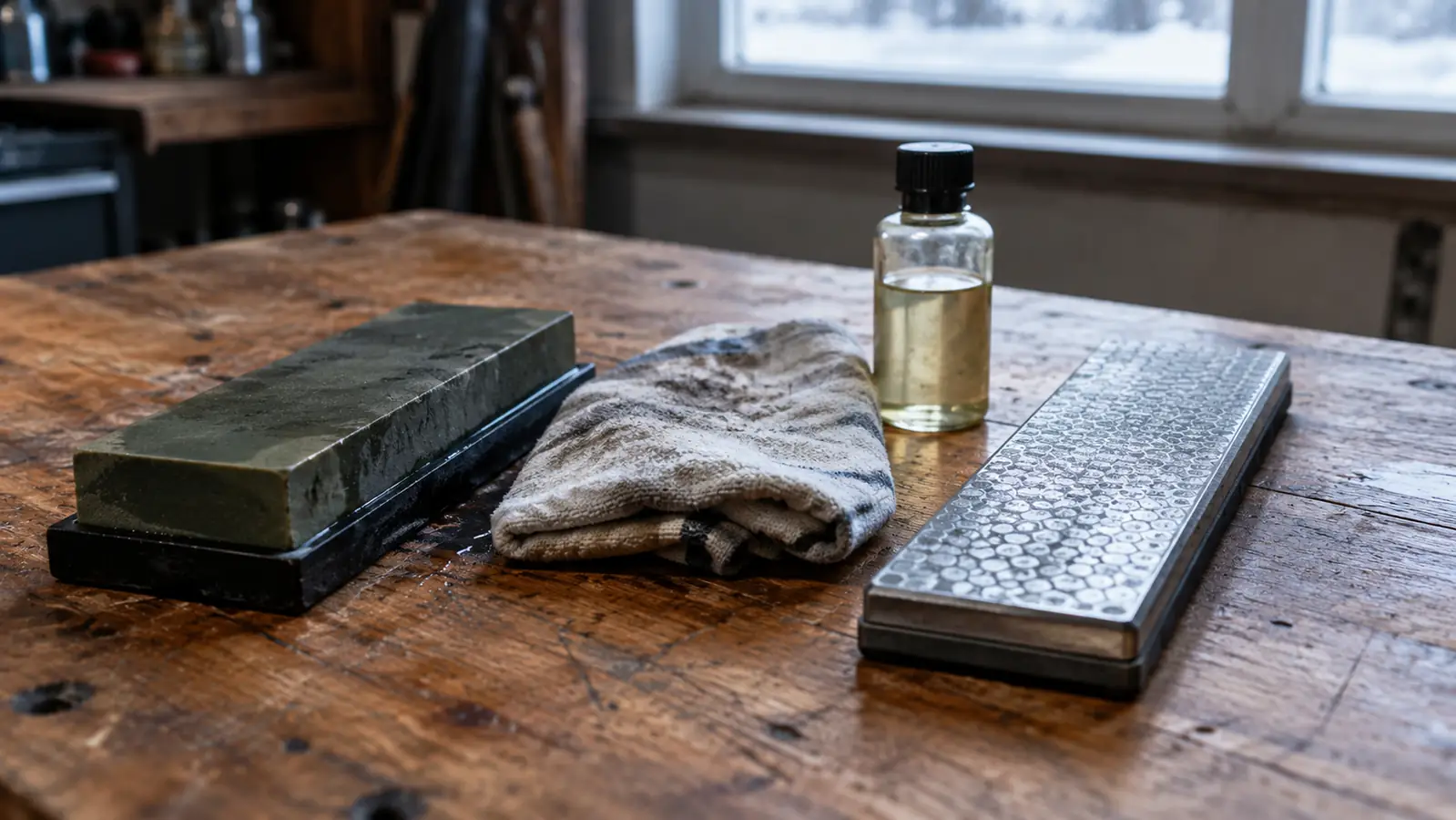
| Oil or water | Light honing oil, never water | Water or dry, wiped with a rag |
| Longevity | Three years in with plenty of stone left, and it can be flattened | Lasts years, but once the diamonds dull the plate is done |
| Best for | A home bench that sharpens chisels and plane irons often | Repair work, job sites, and flattening other stones |
Read that table the way it is written, because the diamond plate wins more rows than the stone does. It is faster, it stays flat, and it does not care whether you use oil or water. What the table cannot show is the part I care about: what the bevel looks like when you are finished, and how much feedback you get while the iron is on the stone. That is where the argument turns, and it is the reason I still reach for the Norton.
Where the Norton Oil Stone Wins
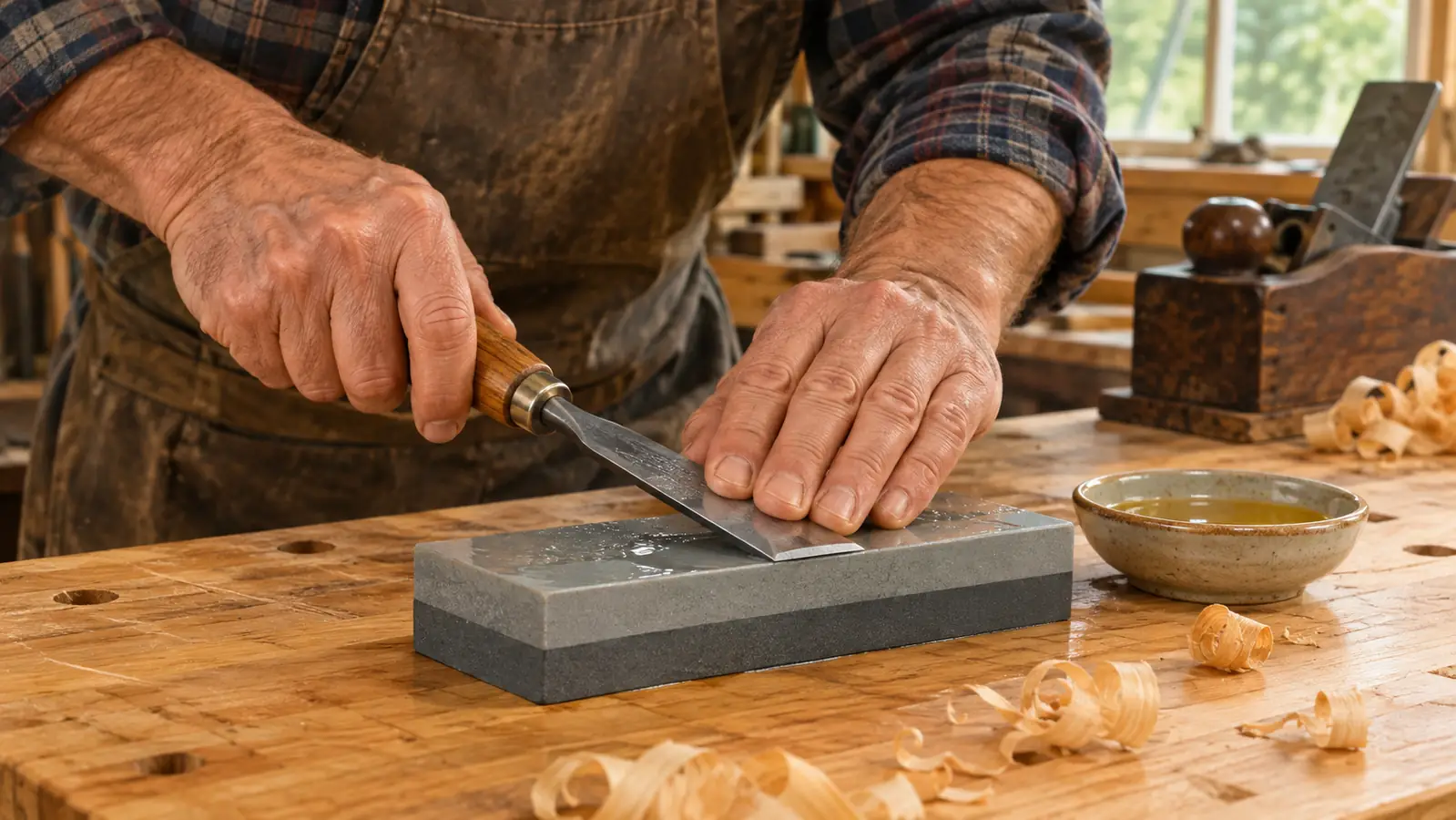
The finish is the first thing. Mine is an 8 by 2 by 1 inch combination bench stone, corundum, with a 100 grit side for repairing an edge and a fine side for honing. The fine side does not leave the deep scratch pattern a diamond plate leaves. It polishes. My bench chisels are ground at 25 degrees, and I hone at 30 with a simple side-clamp guide, then finish on a leather strop. The edge that comes off that sequence will pare end grain on cherry without tearing it. On a fine diamond plate the edge is sharp, but it is brighter and slightly toothier, and the strop has more work to do to clean it up.
Here is the test I use. Take a chisel off the stone, stand a piece of cherry on end in the vise, and pare across the end grain with the flat back registered on the wood. Two winters ago, on the bookcase, I did that on a shelf stile and the shaving came off in one piece with no tear-out along the shoulder. Same chisel, same angle, run across the fine diamond plate at the class, and the shaving came apart and left a fuzzy edge I had to sand back. That is the whole argument in one cut, and it takes less time to run than it does to read about.
Second, feel. Corundum has a little give to it. You can feel the bevel sit down flat, and you can hear the change when the edge comes up. A diamond plate feels hard and slightly gritty under the iron, and on a fine plate the feedback is thin. That sounds like a small thing if you have been sharpening for years. It is not small if you are learning. Holding an angle is mostly learning what the stone is telling you, and the oil stone says more.
Third, one stone covers the whole job. I keep the coarse 100 grit side for a chipped edge or a chisel I let go too long, and the fine side for the weekly touch up. The diamond plates I have handled were single grit. To cover repair and polishing you are buying two plates, or you are doing the repair on one and the finish somewhere else. The Norton handles the full sequence on one 8 inch stone, and it has been doing that on my bench for three years.
Where Diamond Plates Win
Speed is real, and I will not pretend otherwise. At a class I took a few years back, the instructor had us true up a chipped plane iron on a coarse diamond plate, and it was done before I would have had the oil stone wet. Diamond cuts on the push and the pull. It does not load up the way a stone can. If your habit is to put off a dull edge until it becomes a damaged edge, that speed is worth more than anything I have said about polish.
That class was a two-day affair in Boise, four or five years back, and the bench had plates laid out in coarse, medium and fine. What struck me was not the speed on the coarse one. It was that the instructor took a plane iron that had been used to scrape paint and had it back to a working bevel in about ten minutes. Some of that was the plate. Some of it was that he had done it a thousand times. But I came home knowing my stone would have taken me the better part of an evening.
Flatness is the second honest win. A diamond plate is diamond abrasive bonded to a steel plate, and steel does not dish. A stone wears in the middle, which is why I check mine against a straightedge once in a while. A dished stone cannot give you a flat back on a chisel, and a flat back is half of what makes an edge work. I have not had a problem with my stone, but I check it, and that is a habit a diamond plate does not ask for.
Cleanup is the third. The Norton wants a film of light honing oil, never water, which means a rag, a bottle with a cap, and a bench that stays a little slick for the rest of the session. A diamond plate can run with water or dry. In a cold garage in January, with one small electric heater doing what it can, that difference is easier to appreciate than it sounds.
If you want the polished edge more than the fast one, this is the stone I kept
An 8 by 2 by 1 inch Norton combination stone, 100 grit on one side and a fine side for honing. It is what sharpens every chisel and plane iron in my shop.
Amazon See the Norton oil stone on Amazon →What Three Years on One Stone Has Taught Me
The stone lives on a scrap of maple on the bench, and it does not move when I push against it. I put down a film of light honing oil, spread it with a finger, and set the chisel in the side-clamp guide. Ten or twelve passes on the fine side, checking the back against the light, is a normal touch up for a chisel that is only dull. The coarse side stays dry until something is actually wrong with an edge. That is most of what sharpening is at a home bench, and it takes less time than sweeping up afterward.
Setting the guide takes a minute. The chisel registers at 30 degrees against a 25 degree bevel, which puts a small micro-bevel at the edge and keeps the honing on the tip instead of the whole face. I keep a scrap of paper in the bench drawer with the number written on it, because I have set it wrong before and spent an evening taking out a bevel I did not want. Ten or twelve passes is a touch up. Thirty is a chisel that sat too long in the rack, and you can feel the difference in the third pass.
The coarse 100 grit side earns its keep about four times a year. That is when I drop a chisel, or find a nick in a plane iron from a nail I missed in a board I was reusing. I work the damaged spot on the coarse side until the nick is gone, then move to the fine side and finish on the strop. It is slower than a diamond plate would be. It is also controllable, and I have never taken off more steel than I meant to, which is the mistake that costs you a chisel.
The habit that came with the stone is the flatness check. Once in a while I lay a straightedge across it and look for light in the middle. Three years in, mine is still close, and the stone has plenty of life left. A stone that dishes can be flattened and put back to work, which is not something you can say for a worn diamond plate. I keep my old hardware store chisels for rough work, and they get sharpened on whatever is closest, but the bench chisels only see the Norton.
I check the stone before anything that matters, not every time. Straightedge down the length, hold it up to the window, look for a sliver of light under the middle. If I see one, I take it to a sheet of wet-or-dry paper on the glass offcut I keep behind the bench for exactly that job, work it in circles for a few minutes, and wipe it clean. It is a small chore, maybe twice a year, and it is the price of a stone that stays honest.
Three years in, the stone has plenty of life left, but I still lay a straightedge across it before I trust it with the back of a chisel.
The Argument I Hear Most
The argument is always the same. Diamond is faster, so why bother with a stone. My answer is that speed only matters when there is damage to remove, and most of my sharpening is not repair, it is maintenance. Two minutes on the fine side of a Norton, a few passes on the strop, and the chisel goes back to the rack. The fast tool solves a problem I do not have most Tuesday nights, and it gives up the finish I do want on the edge that pares the end grain on a walnut table.
The other argument is that oil stones are a leftover from another era. They are slower than a diamond plate and they are messier, and neither of those is a rumor. But a tool does not have to be the newest thing on the bench to be the right thing for the work. A stone that has been made the same way for a long time is a known quantity. I know what mine will do on a chisel, and I know what it will do on the iron in my bench plane, because I have done it a few hundred times.
What I Liked
- One 8 by 2 by 1 inch stone covers both edge repair and honing
- The fine side leaves a polished bevel that the strop cleans up quickly
- Enough feedback under the iron to learn an angle by feel
- A 1.5 pound bench stone that sits still on a scrap of maple
- Can be flattened and kept in service instead of replaced
Where It Falls Short
- Needs light honing oil, never water, which means a rag and a capped bottle
- Corundum wears in the middle, so flatness has to be checked
- Slower than diamond on a chipped or damaged edge
- Leaves the bench a little slick for the rest of the session
Who Should Buy Which
Buy the Norton oil stone if you sharpen at a bench, on chisels and plane irons, and you want the edge finished rather than just restored. It suits someone who is learning, because the stone tells you what is happening under the bevel. It suits someone who keeps a small sharpening setup out and uses it for five minutes at a time instead of saving up a pile of dull tools for a weekend. If you are building furniture in a garage and you want one stone that handles a nick and a touch up, this is the one I would hand you.
Buy a diamond plate if your sharpening is mostly repair, or if you work away from a bench, or if you flatten water stones, which is a job a diamond plate does better than anything else. A plate also makes sense if you know you will not keep up with the oil and the flatness check. If you stick with hand tools long enough, you will probably end up with both, and that is not a failure of discipline. I would still start on the stone, because the stone is the one that teaches you what a sharp edge feels like.
The stone I would buy again tomorrow, and did buy three winters ago
Combination corundum, 100 grit on the coarse side, a fine side for honing, and a flat 8 inch face to work on. Everything I sharpen in the shop goes across it.
Amazon See the Norton oil stone on Amazon →