

Thirty-four years of finish carpentry and I still watch people lay out a cabinet run with nothing but a tape measure. I did it too, for most of those years. A tape is a fine tool for finding how long a board is. It is a poor tool for finding where the line goes, and layout is entirely about where the line goes.
I rebuilt my hand tool kit the winter after I retired, three years ago now, because I did not want to keep reaching for beat-up job-site tools in my own shop. The IRWIN combination square was one of the first things I bought. Twelve-inch stainless steel blade, metal body, black etched scales in sixteenths. I checked it against a straight edge with the flip test the day it came out of the box and it was true, and it has stayed true through three years of furniture work in the garage outside Boise.
The tool that does the layout job the tape keeps getting wrong
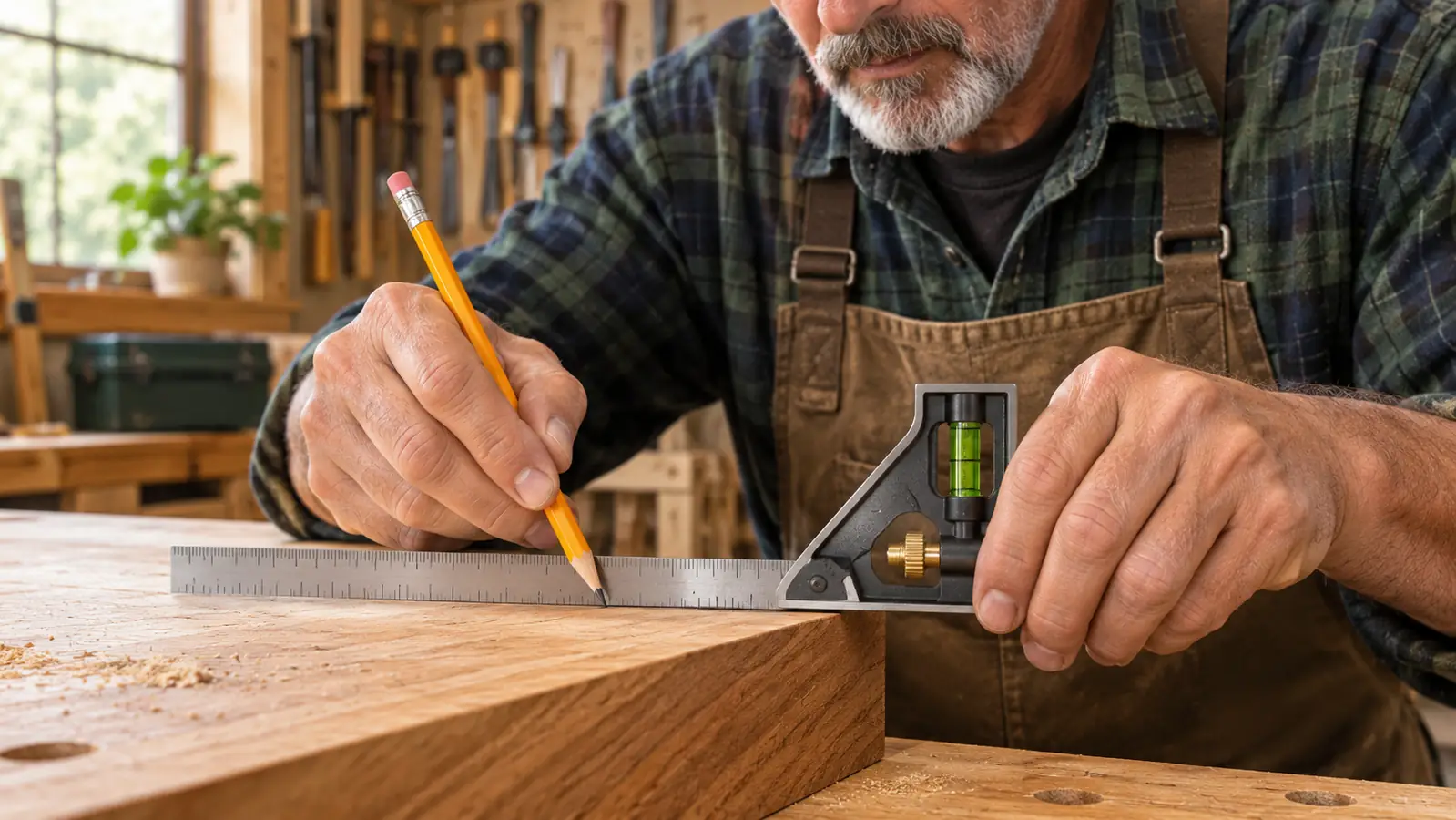
The IRWIN combination square butts against a true edge, marks 90 and 45 degrees, and locks its blade with a knurled nut. Twelve-inch stainless blade, metal body, etched sixteenth scales, and it doubles as a depth and marking gauge.
Amazon Check today's price on Amazon →One motion gives you a square line off the edge
A tape has to be hooked, held, read, and set down before you pick up a pencil. That is four chances to lose a sixteenth. The square's body butts against the edge of the board and the blade hands you the line in one motion. When I mark the shoulder of a tenon, the line lands on the face where I can see it, not out on the edge where the blade was.
The 45 degree miter is already in the head
Miters are where a tape fails hardest, because a tape gives you a length and no angle at all. Set the body on the edge, run the blade across at 45, mark it, and the miter is laid out. I cut the aprons for the shaker end tables this way. You still have to saw to the line, but at least the line is right.
Set it once and mark a whole stack of parts
Loosen the knurled nut, slide the blade to the measurement, snug it down, and the IRWIN square becomes a fixed gauge. Stack the four legs for a table, square the blade against each one, and mark. Every mark is identical because nothing got re-read. A tape read four times is four different marks, and they will not agree with each other.
Depth checks without reaching for a second tool
The blade slides through the head, so the same tool checks depth. When I cut the stopped grooves in the cherry bookcase, I checked each pass with the end of the blade, not with a tape hook that catches on the edge and bends. If a groove is a sixteenth shallow, I know before the shelf goes in. After is a repair.
It sits on the face of the board where you can see it
The body rests flat on the board and the blade stands on the face, so you are marking a surface you can actually look at. The pencil is not chasing a tape blade that is curling away from the work. Small thing, I know. It saves a fair amount of sanding on a joint that is going to be visible.
Check a board for square before it ever reaches the saw
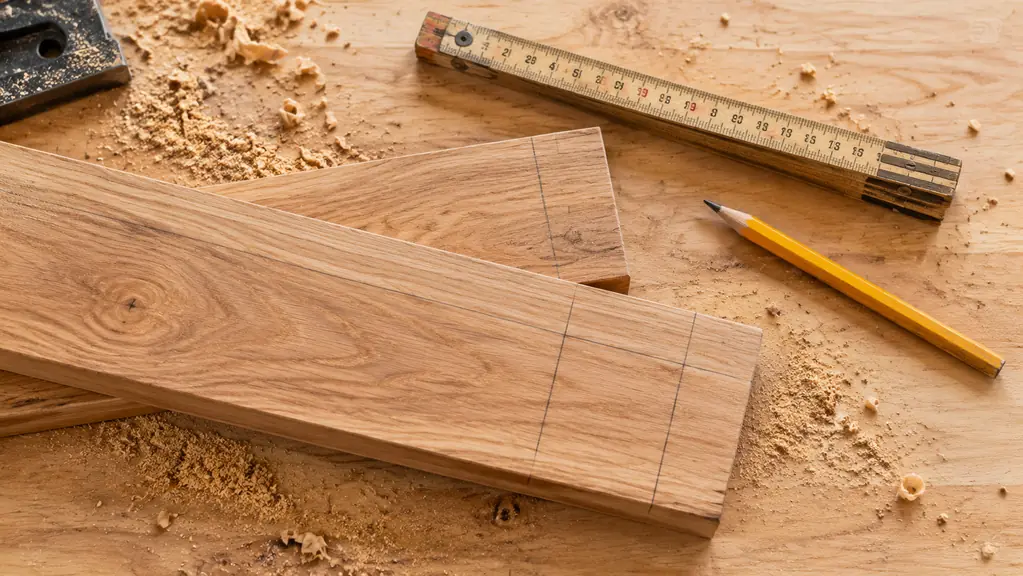
Before anything goes on the table saw I check the end. Square across one edge, then flip the body over onto the same edge and check again. If the line moves, either the end is not square or the square is not. The IRWIN square has not moved in three years, so I usually blame the board. Ten seconds, and it has saved more than one piece of walnut.
Set the fences and tables on your machines
The table saw fence, the band saw table, the drill press table, all of them get checked against the blade or the table with a square. A tape cannot do this job at all. When I set up the drill press for the dowel holes in the end tables, the square told me the table was off before I drilled the first hole instead of after the fourth.
It reaches into a corner a tape hook cannot
Inside a cabinet, or against a face frame that is already installed, a tape hook has nothing to catch and the blade bends away from you. The square's body sits against the stile and the blade reaches into the opening. Twelve inches covers most of what I do inside a case. Past that I use a tape, and I will say so plainly, because the square is not a long measuring tool.
No blade slap and no bent hook
A tape retracts under spring tension and it will get you eventually. The hook bends after one drop from the bench, and then every measurement is off by the thickness of a bent hook, which is a mistake you cannot see. The square has one moving joint, the knurled nut, and a metal body that has survived three years of me setting it down on a concrete floor.
Etched sixteenth scales that do not rub off
The scales on the IRWIN square are etched into the blade, not printed on it, in sixteenths, with the 90 and 45 degree marks right where you need them. In a shop that is half sawdust, printed scales wear away in a couple of years and then you are guessing. The stainless blade also means I am not oiling it every week, and the metal body carries a limited lifetime warranty I have never had to use.
None of this is about the name stamped on the tool. It is about having a true edge to work from. The IRWIN square earned its place on my bench the same way any tool does, by being right the first time and staying right. Thirty-four years in, I still make mistakes. I just make fewer of them when the line is square and the mark does not move between the bench and the saw.
What I'd Skip
I would skip using the square for anything past twelve inches. It is not a tape and it does not pretend to be. Long rips and full sheets get a tape and a straight edge, and then the square checks that the result is actually square. I would also skip the stamped squares with painted scales sold out of a bin, because the paint goes away and the head is not machined true, so you are laying out from a tool that was never right.
And I would skip trusting any square, new or old, without the flip test against a straight edge on the first day. Mine passed. If yours does not, send it back before it costs you a board. The other habit worth skipping is laying out a joint with a tape and then checking it with the square afterward. Do it once with the IRWIN square and be done with it.
A tape tells me how long a board is. The square tells me where the line goes. Only one of those is layout.
The layout tool I reach for before the tape, every single time
Twelve-inch stainless blade, metal body, etched sixteenth graduations, 90 and 45 degree marking, and a knurled nut that holds the setting where you put it. Three years in a working shop and it is still true.
Amazon Check today's price on Amazon →