
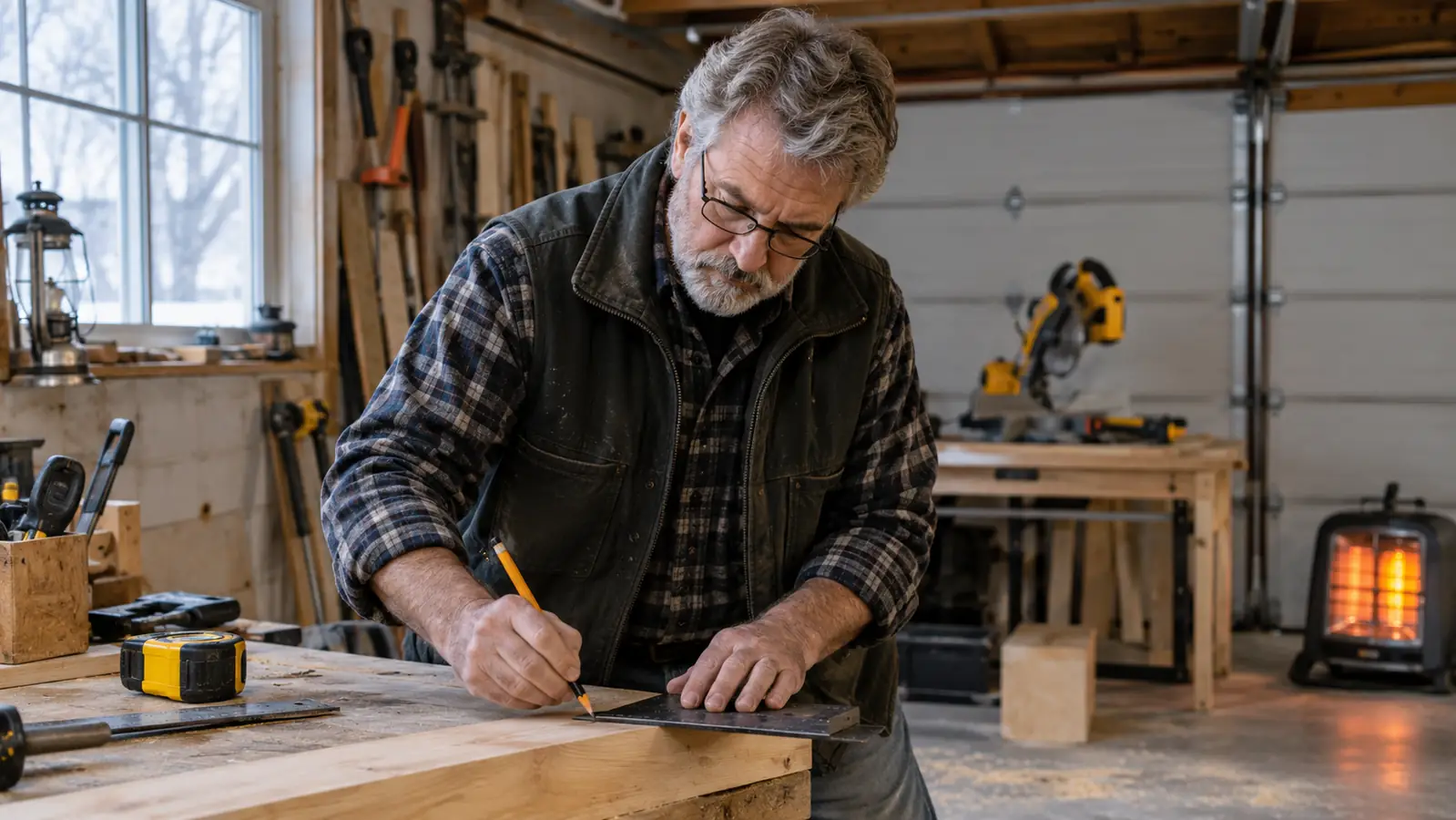
The first furniture piece I built after I retired came out crooked. Not badly crooked. Crooked enough that the drawer front sat proud on one corner and the whole thing racked when you pushed it. I had thirty-four years of trim and cabinet installs behind me and I still built a crooked end table in my own garage. Marit, who is kind, said it looked handmade. She was right, and that was the problem.
What I had was a tape measure and a speed square. That is what I used on job sites for most of my career, and on job sites it is fine. Trim gets covered by the next piece. Cabinets get shimmed. Furniture does not hide anything. A tape has a hook that moves, and a speed square has a short fence that sits on the edge of a board and nothing else. Neither one hands you a repeatable line, and furniture is nothing but repeatable lines.
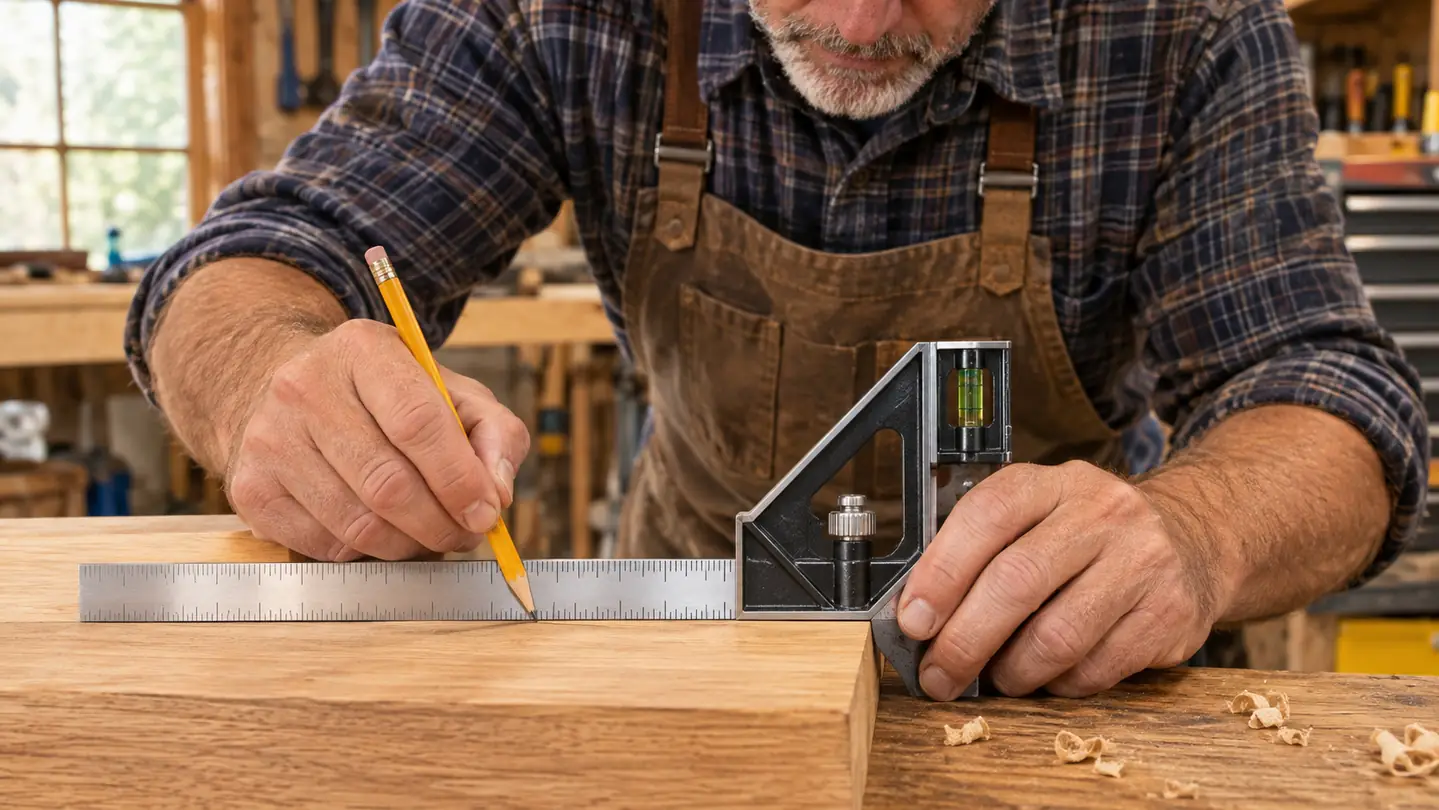
When I rebuilt my hand tool kit the winter after I retired, I bought the IRWIN combination square along with the chisels and the clamps. Twelve-inch stainless steel blade, metal body, black etched scales in 1/16 inch graduations, marks 90 and 45 degrees, sliding blade locked with a knurled nut. It cost me a Saturday of getting used to and it changed how the work came out. Three years later it is the first thing I pick up and the last thing I put down.
A tape tells you a number. A square tells you whether the board is honest.
The tool I reach for before I make a single mark
Twelve-inch stainless blade, black etched scales in 1/16 inch graduations, 90 and 45 degree marking, and a sliding blade you lock with a knurled nut. It is the first thing I pick up and the last thing I put down.
Amazon See the IRWIN Combination Square on Amazon →Here is what a combination square does that a speed square does not. The blade slides. That means the same tool marks a line at 90 degrees, marks a 45, and then sets to any depth you want and rides the edge of the board to mark a line down the face. When I am laying out mortises on a shaker-style end table, I set the IRWIN blade to the mortise depth, hold the body against the edge, and mark every leg with the same setting. No tape, no pencil creeping, no measuring twice and cutting once and still being off. The scale is etched black right into the stainless blade at 1/16 inch graduations, so I am reading the tool rather than guessing at a tape hook.
When it arrived I did the flip test, which is the only test that matters. I laid the body against a known straight edge, marked a line, flipped the square over, and marked the same line again from the other side. If the two lines agree, the tool is true. Mine agreed. I have checked it once more since. Three years in the shop and it still reads the same, and the stainless blade has not spotted or rusted, which in an unheated Idaho garage with cold dry winters is more than I can say for a couple of my other tools.
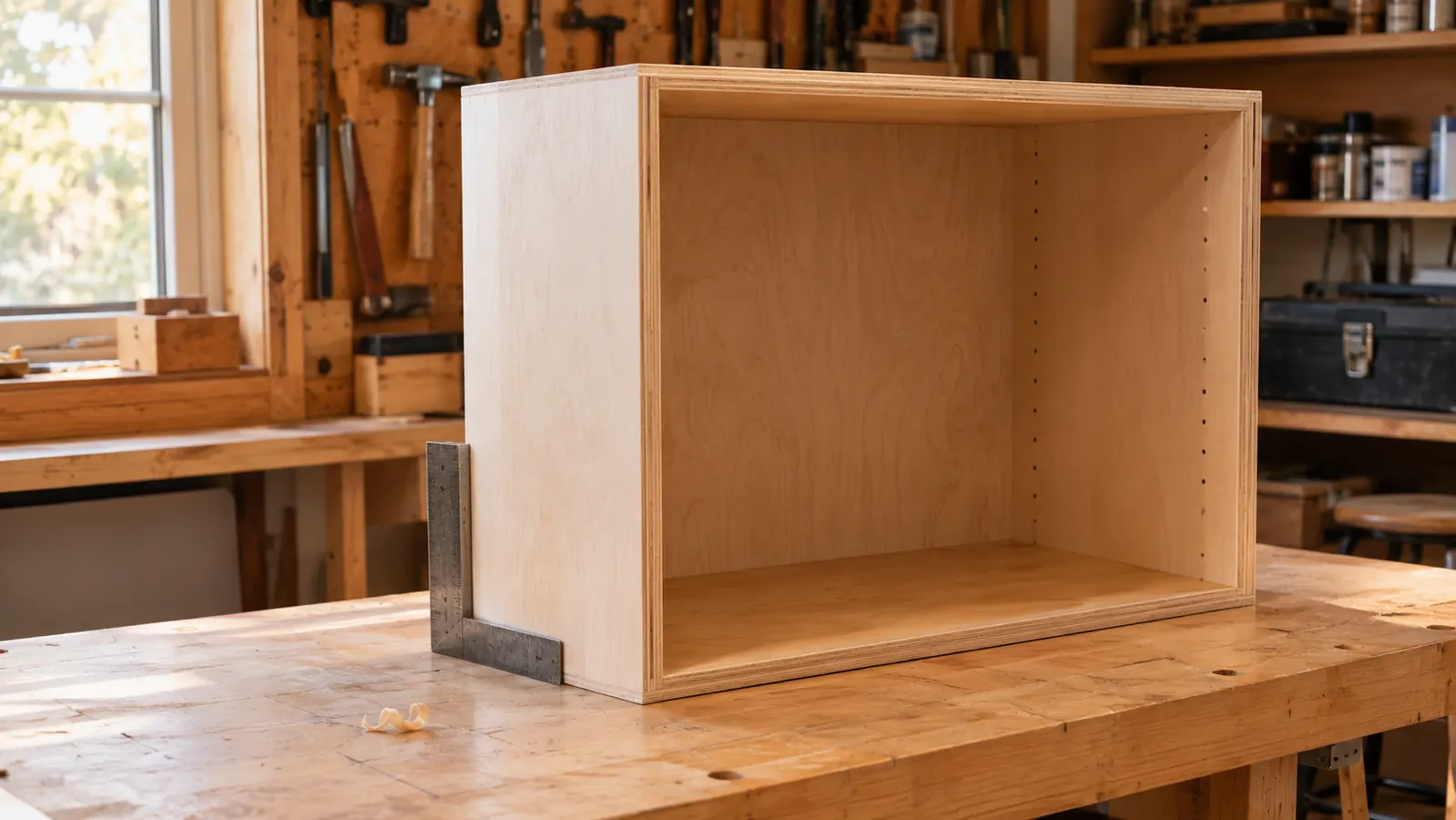
I want to be fair to the speed square, because I still own it and still use it. If I am cutting a rafter or breaking down a sheet of plywood, the speed square is faster and I can hit it with a hammer without thinking twice. But it will not set to a depth and it will not transfer a measurement across a batch of parts. That is the whole job when you are building furniture. The cherry bookcase I finished two winters ago went together square on the first dry fit, and every part on it was marked off the IRWIN square, not off a tape. I credit the layout, not my hands.
One honest complaint. The knurled nut is small and my fingers are not what they were, so when I am switching the blade between a 90 and a 45 in the middle of a glue-up I sometimes have to set it down and pick it up again to get a grip. That is a note about my hands, not a fault in the tool. The other note is that this is a metal-bodied square, not a machinist's instrument, and if you are chasing tenths on metal you want something else entirely. For wood, it is plenty, and the IRWIN has never once let a line wander on me.
What I'd Tell You If We Were Sitting at My Kitchen Table
I would tell you that you probably already own a tape and a speed square and you probably think that is enough, because I thought that for thirty-four years. It is enough right up until you care what the finished piece looks like. The walnut dining table I built for Marit last winter is the piece I am proudest of, and the reason it came out flat and square is that every joint on it was marked off one setting on the square instead of being measured fresh each time.
I would also tell you not to buy a square and then trust it. Flip it. Check it against something you know is straight. Do that before you cut a single board, because a square that is out by a degree will lie to you quietly for a whole project and you will blame your saw. And keep your good lumber for the projects where you have laid out properly. Cheap pine is for practicing. Walnut is for after you have checked the tool.
Start with the layout, not the saw
If your joints keep coming out crooked and your machine is set up right, the problem is usually upstairs from the blade. One setting, one line, every part the same.
Amazon Check Today's Price on Amazon →