

A glue-up is a clock, not a project. You spread the glue, you set the parts, and somewhere around eight to ten minutes later Titebond III stops being forgiving. Everything you do between those two moments either buys time or spends it. That is the whole reason four IRWIN Quick-Grip mini clamps live within arm's reach of my bench. They are not the biggest clamps in the shop and they are not meant to be. They are the ones I can set, squeeze and square up with one hand while the other hand is still holding a rail where it belongs.
For 34 years I installed trim and cabinets for a living, and the clamps on the truck were pipe clamps and old C-clamps, both of which want two hands and a free minute. When I retired four years ago and started building furniture at home, I rebuilt the hand tool kit that first winter. The mini clamps went in with the chisels and the square. Three years later they are still the first thing I reach for on a drawer box, a small frame or a jig, and I have not once wished I had a second set of hands instead. Here are the ten places they earn that spot.
Four clamps, two hands, one less thing to fight during a glue-up
The IRWIN Quick-Grip 4-pack of 6-inch one-handed mini bar clamps. Trigger squeeze to tighten, instant release when you need to reposition, up to 140 pounds of clamping force, soft pads on the faces.
Amazon Check Today's Price on Amazon →Your second hand stays on the joint instead of on the clamp
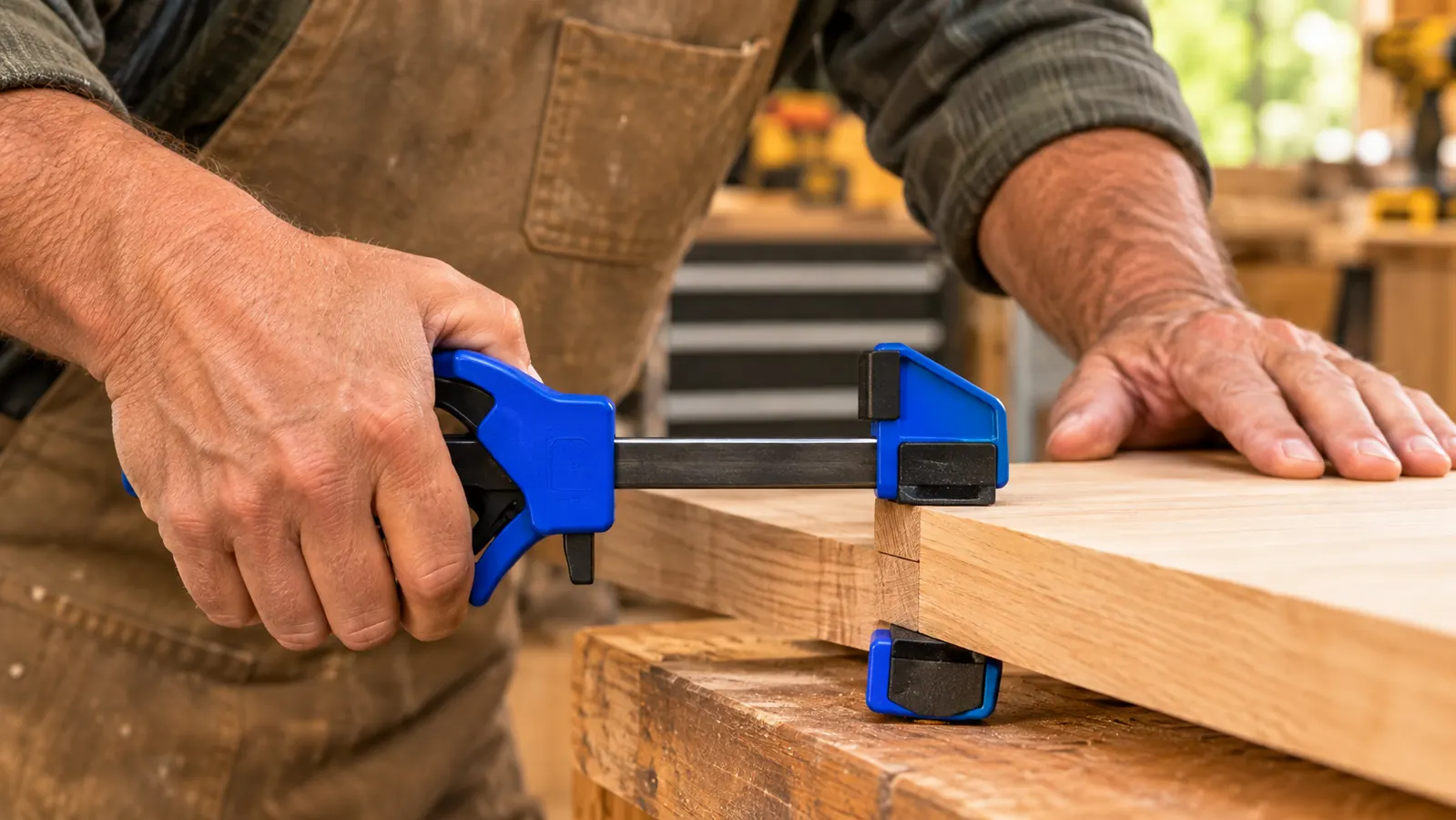
A bar clamp with a screw thread takes two hands, one to hold the clamp where you want it and one to spin the handle. That is a hand off the joint at the exact moment the joint wants attention. The trigger on these lets me set the pad against the work, squeeze, and keep my other hand on the rail, reading the shoulder line while the glue is still open. It sounds like a small thing. On a drawer box with four parts to line up, it is the difference between square and almost square.
It buys back the minutes the glue is already spending
Titebond III gives me about eight to ten minutes of working time, and that number does not care that I am in a hurry. Every clamp I can close in two seconds is also a clamp I am willing to open back up when I see a part creep. With a screw clamp I think twice about adjusting anything, because the adjustment costs thirty seconds I do not have. With a trigger I just fix it and move on to the next corner.
The trigger gives you a feel for pressure that a spinning handle does not
I squeeze until the joint closes and the pads stop moving, then I stop. The hardened steel bars are there to keep the clamp from bowing when you lean on it, and these are rated at 140 pounds of clamping force. That is more than a drawer side will ever need. It is not enough to pull a badly cut joint shut, and no clamp is, so do not ask it to. Use it to hold what you already fitted correctly.
Soft pads meet a finished face without leaving a mark
Cherry and walnut mark if you look at them sideways. The pads on these clamps are soft and they are there for exactly that reason, to hold the work and leave the face alone. I still slide a scrap of wax paper under a pad when glue is going to squeeze out, but the pad itself has never left a dent in a surface I had already planed and sanded. On the cherry bookcase I built two winters ago, every shelf got clamped with these and every shelf came out clean.
Eight to ten minutes of working time. That is the whole clock. A clamp that needs two hands takes one of them off the job.
The release is instant, so you can change your mind while the glue is wet
The quick release is the part nobody mentions and everybody uses. I close a joint, look at it, decide the rail is a sixteenth high, and let it go. On a screw clamp that is a chore that eats the clock. On these it is a squeeze of the trigger and the clamp is off the work. When you are gluing up against a deadline set by the glue itself, the ability to undo a decision quickly is worth as much as the ability to make one.
Six inches of bar covers the work this bench actually does
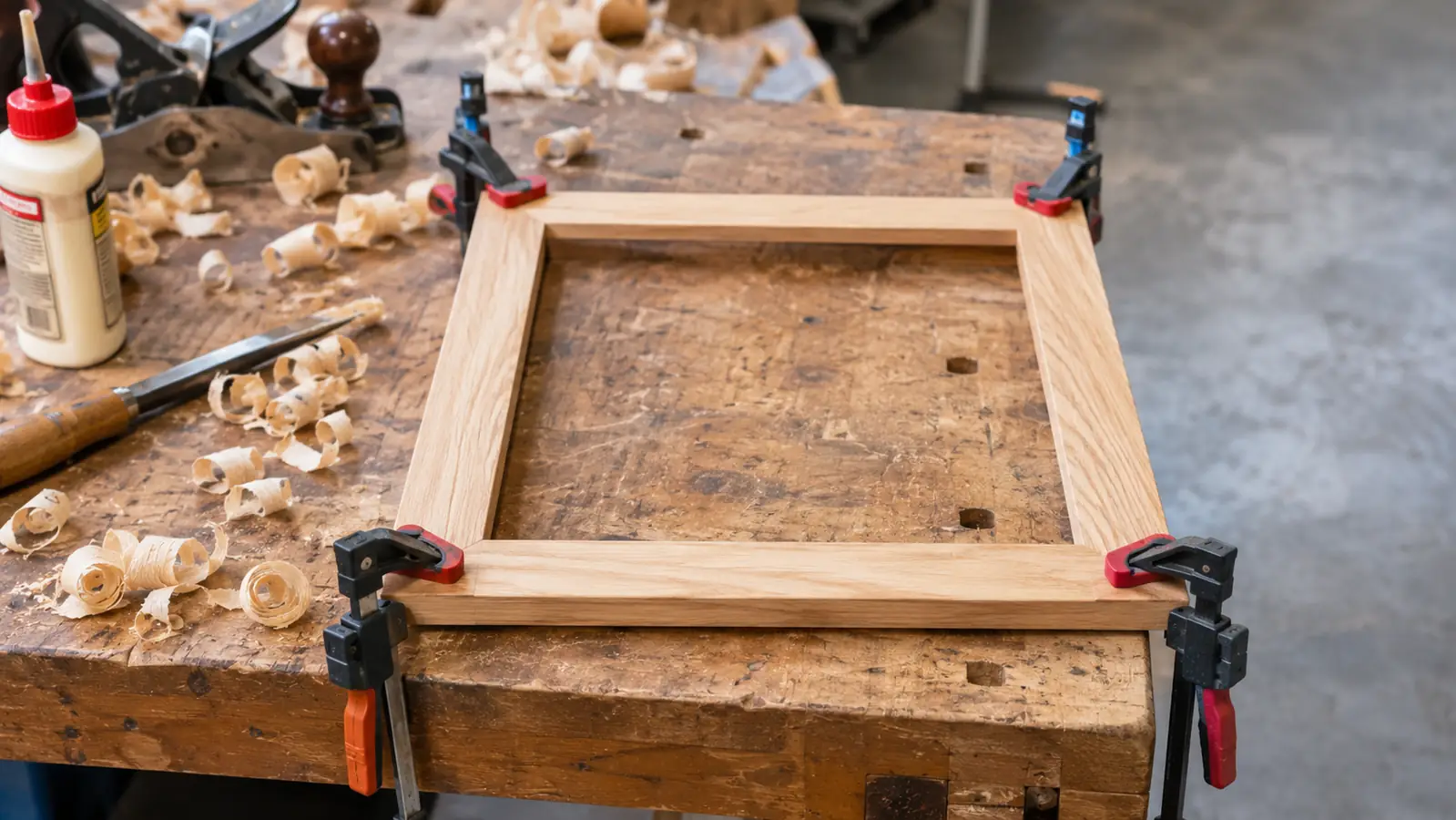
Drawer sides, small face frames, a box bottom, a glued-up blank for a cutting board gift. That is the size of the work that comes off my bench, and a 6-inch clamp fits all of it. The wide panels and the tabletops go to the pipe clamps, and that is not a knock on these. A 6-inch clamp trying to close a thirty-inch tabletop is the wrong tool doing the wrong job, and it will tell you so by bowing.
Four clamps is a working set, not a sample pack
One clamp is a clamp. Four clamps is a set. A drawer box wants four at once, one at each corner, and owning exactly four means I am not rationing them or waiting for one glue-up to finish so I can start the next. That is why I bought the four pack instead of singles, and three years in I have not once needed a fifth one sitting on the bench.
They hold jigs and stop blocks, not just glue joints
Half of what these clamps do in my shop has nothing to do with glue. A stop block on the drill press, a fence I need to hold for one cut, a jig for a hinge mortise, a batten holding a board steady while I mark it. The trigger clamps hold all of it and let go the second I am done. That is a use I did not plan for when I bought them, and now it happens more days than the glue-ups do.
Resin bodies and steel bars stay manageable in a cold garage
My shop is a two-car garage with a concrete floor and one small electric heater, so in January everything is cold to the touch. The resin bodies on these do not bite a bare hand the way all-steel tools do, and the whole set is listed at 454 grams, light enough to move around the bench all afternoon. The bars are hardened steel, so the working part is still steel. The part your hand lives on is not, and in a cold shop that matters more than it sounds.
They reach inside the tight spots a long bar clamp cannot get into
Inside a drawer box, behind a face frame, down in a carcass where a long bar clamp will not sit without tipping the work. That is where these earn their keep, because confined areas are also where you have the least room to work with two hands. The short bar and the small body are the entire point. I keep the pipe clamps for the wide work and I keep these for the work that happens in a corner.
What I'd Skip
I would skip buying a dozen of them. Four covers what a hobby shop does, and the fifth clamp you buy is usually a clamp that lives in a drawer. I would skip them entirely for tabletops and wide panels, because that is pipe clamp work and always will be. I would skip squeezing past the point where the pads stop moving, since a clamp holds a joint, it does not repair one that was cut badly. And I would skip the idea that a one-handed clamp substitutes for good layout. If the parts are not square before the glue goes on, no clamp in the shop will square them after.
One more thing worth skipping: gluing up in a cold shop. Titebond III does not want to be used below 47 degrees, so in winter I bring the bottle indoors and warm the garage before I open it. A clamp that closes fast is no help if the glue has gone stiff in the bottle. Set the shop right first, lay the parts out dry, then start the clock.
The clamp I reach for before anything else on the bench
The IRWIN Quick-Grip 6-inch one-handed mini bar clamps, four to a pack. Trigger squeeze to tighten, instant release to reposition, hardened steel bars, soft pads that leave a finished face alone.
Amazon Check Today's Price on Amazon →