

The apron on the second shaker end table sat a quarter inch proud of the leg, and I did not see it until the clamps came off. I had used pipe clamps on a joint no bigger than my hand, which meant a three-quarter inch pipe and a crank handle hanging off a 6-inch piece of cherry. The weight of the pipe pulled the assembly off center while I was reaching for the second clamp. I finished that table. Then I ordered a four pack of IRWIN Quick-Grip 6-inch one-handed mini bar clamps, and they have not left the peg above my bench since.
Here is what 34 years of trim and cabinet work taught me, and 20 more years of building furniture at home confirmed. The clamps that cause trouble are rarely the big ones. Big work is forgiving. There is room to reach in, room to see the joint close, room to correct a piece that slides. Small work is where the mistakes live.
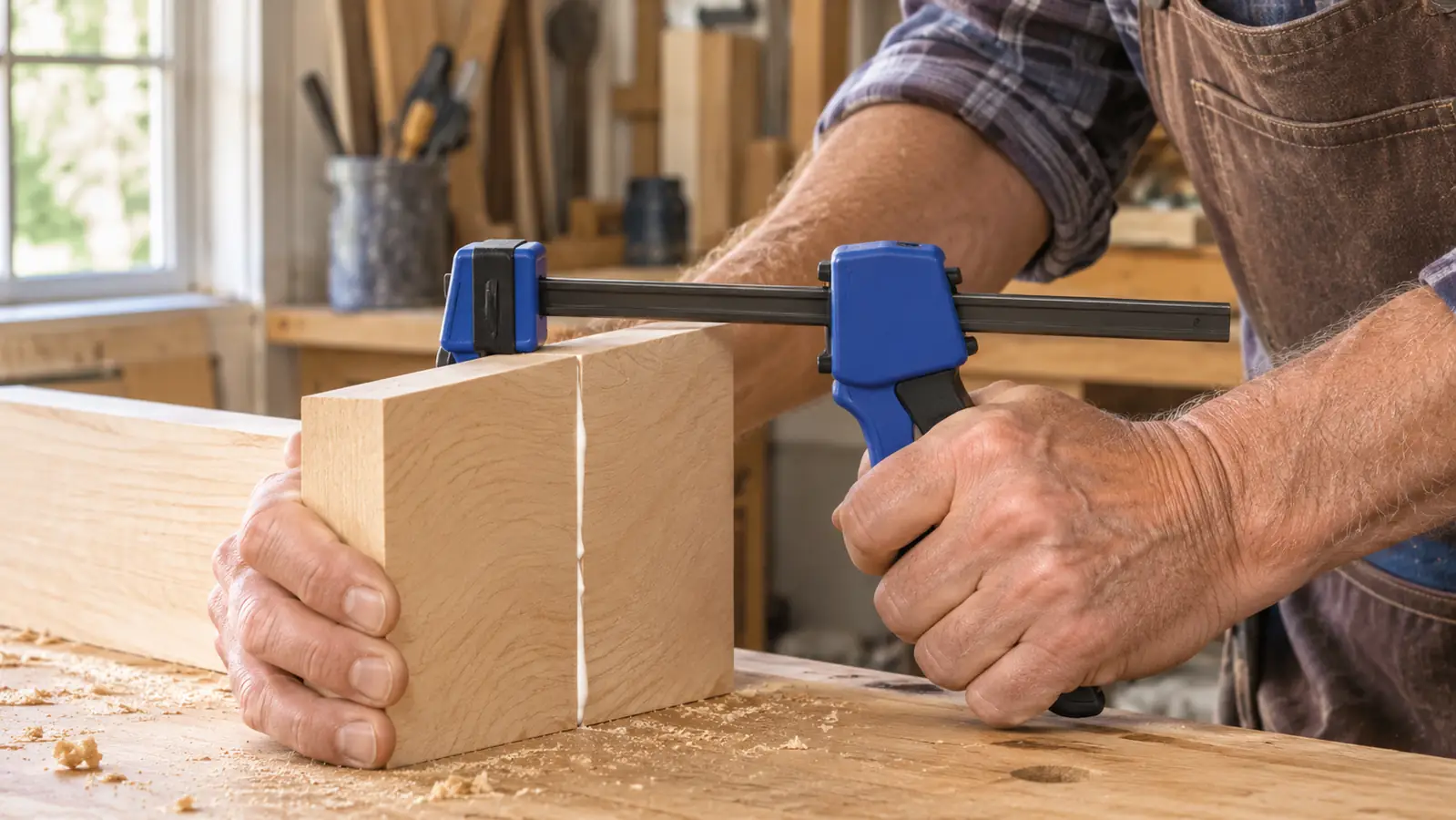
An apron to a leg. A drawer side to a drawer front. A stop block clamped to a fence for one cut. Those joints are 3 or 4 inches long and they want light pressure applied square, not a load of force applied crooked. The IRWIN minis are 6-inch one-handed bar clamps with resin bodies and hardened steel bars, rated to 140 pounds of clamping force. That is more than a drawer part needs and about right for a small frame.
What sold me was never the number. It was the trigger. You squeeze the handle with your palm, the jaw slides in, and your other hand never leaves the joint. Try that with a pipe clamp and you will watch the pieces slide apart while you turn the crank with both hands.
The release matters just as much. There is a lever at the back of the handle and it drops the jaw instantly. During a glue-up I am working against 8 to 10 minutes of open time with Titebond III, so being able to pop a clamp off, shift it a half inch and set it again without cranking is worth more than any spec printed on the package.
A clamp you can set with one hand, while the other hand holds the joint closed, beats a clamp that only wins on force.
Four 6-inch clamps that stay on the peg, not in the bottom of a bucket
One-handed trigger, instant release, 140 pounds of force, and soft pads that leave hardwood alone. This is the set I reach for on drawer parts, jigs and stop blocks.
Amazon Check Today's Price on Amazon →The pads are soft enough that I have clamped cherry and walnut with them and left no dent, as long as I do not lean on the trigger like it owes me something. That part is on the operator. A clamp will happily crush a soft edge if you let it, and the softer the pad the less excuse you have.
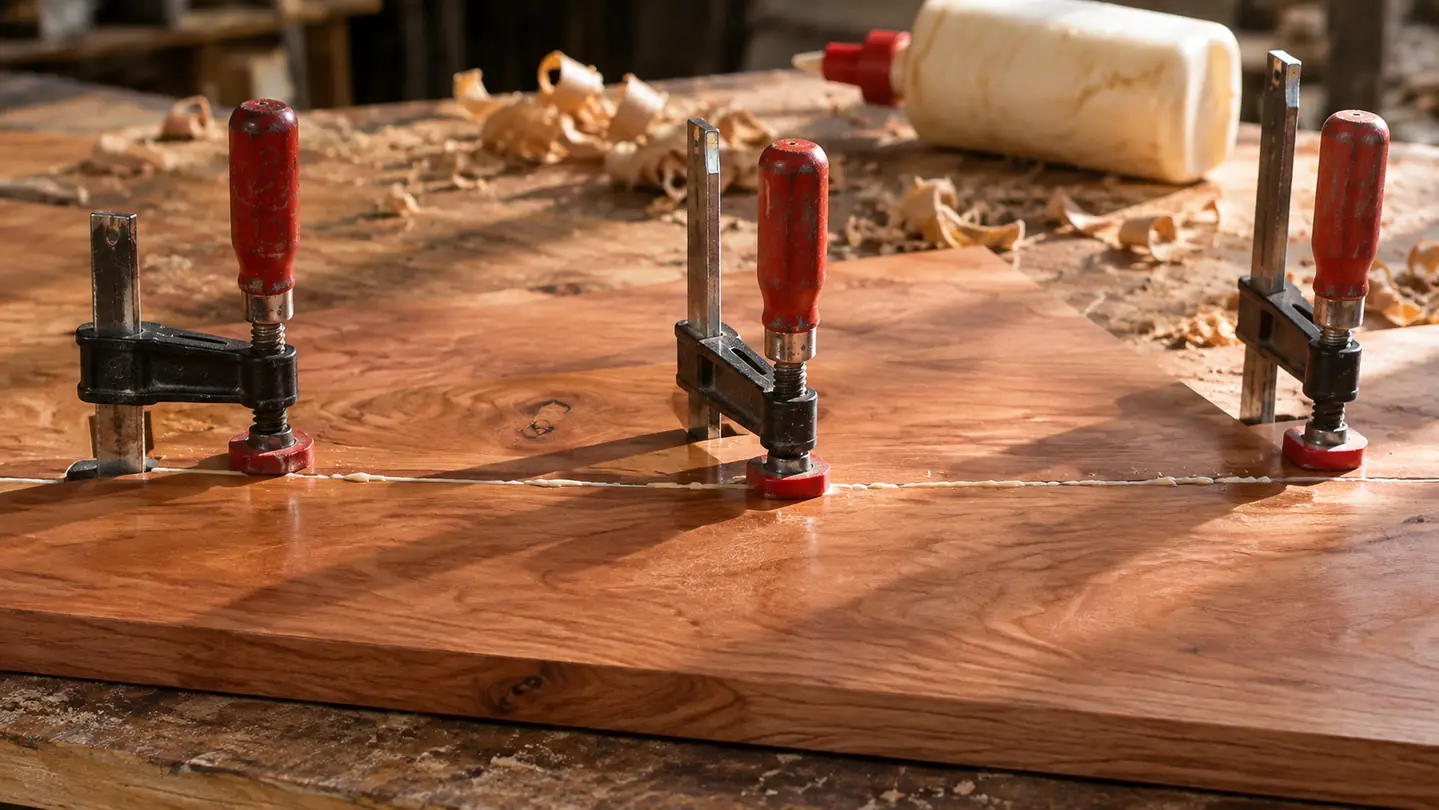
Where they stop is worth saying plainly. These will not clamp a tabletop. I built a walnut dining table for Marit last winter and the top went together with the six pipe clamps, same as always, three across each seam. The minis held the drawer runners and the corner blocks that same week, and they were the right tool for exactly that.
They also fit where a pipe clamp cannot go. Inside a carcass, behind a face frame, under a shelf with 4 inches of clearance. The listing calls that working in confined areas, which is a dry way of describing a job that used to involve a lot of swearing and a C-clamp with a bent screw.
One pack of four is what I own. The set weighs about a pound, which means I can carry all four in one hand from the peg to the bench without thinking about it. No hoisting, no threading a pipe, no hunting through the shavings for a missing jaw pad.
They have been in the shop three years now, since the winter after I retired, when I rebuilt my hand tool kit so I would stop dragging job-site tools home. The bars are still straight. The pads are scuffed. The triggers still return on their own. Nothing has been replaced.
Last Christmas I was making cutting boards as gifts and used two of them to hold a stop block on the band saw fence for a dozen identical rips. That is not what the package shows them doing. It is what they are good at, because a small clamp that sets in a second is the difference between a consistent cut and a witness mark you have to plane out of a finished face.
What I'd Tell You If We Were Sitting at My Kitchen Table
I would tell you to buy four and not one, because a single clamp is a paperweight and four is a set that can hold a small frame square while you check the diagonals. I would tell you to dry fit first, every time, and to check for square before the glue goes on rather than after. I would tell you these are for small assemblies, drawer parts, jigs and stop blocks, and that a tabletop still belongs in pipe clamps with a caul across it. I would tell you to wipe the squeeze-out with a damp rag while it is wet, because Titebond III cleans up with water and does not once it has cured. And I would tell you not to overtighten. The pads are soft, the joint only needs to close, and a starved joint is a repair waiting to happen. That is the whole of it. The clamps are not the interesting part of the work. They just have to not be the problem, and the IRWIN minis have not been a problem in three years.
The clamp I reach for before the pipe clamps come off the wall
Four 6-inch one-handed clamps, 140 pounds of force, soft pads, instant release. Mine have been on the peg for three years.
Amazon Check Today's Price on Amazon →