
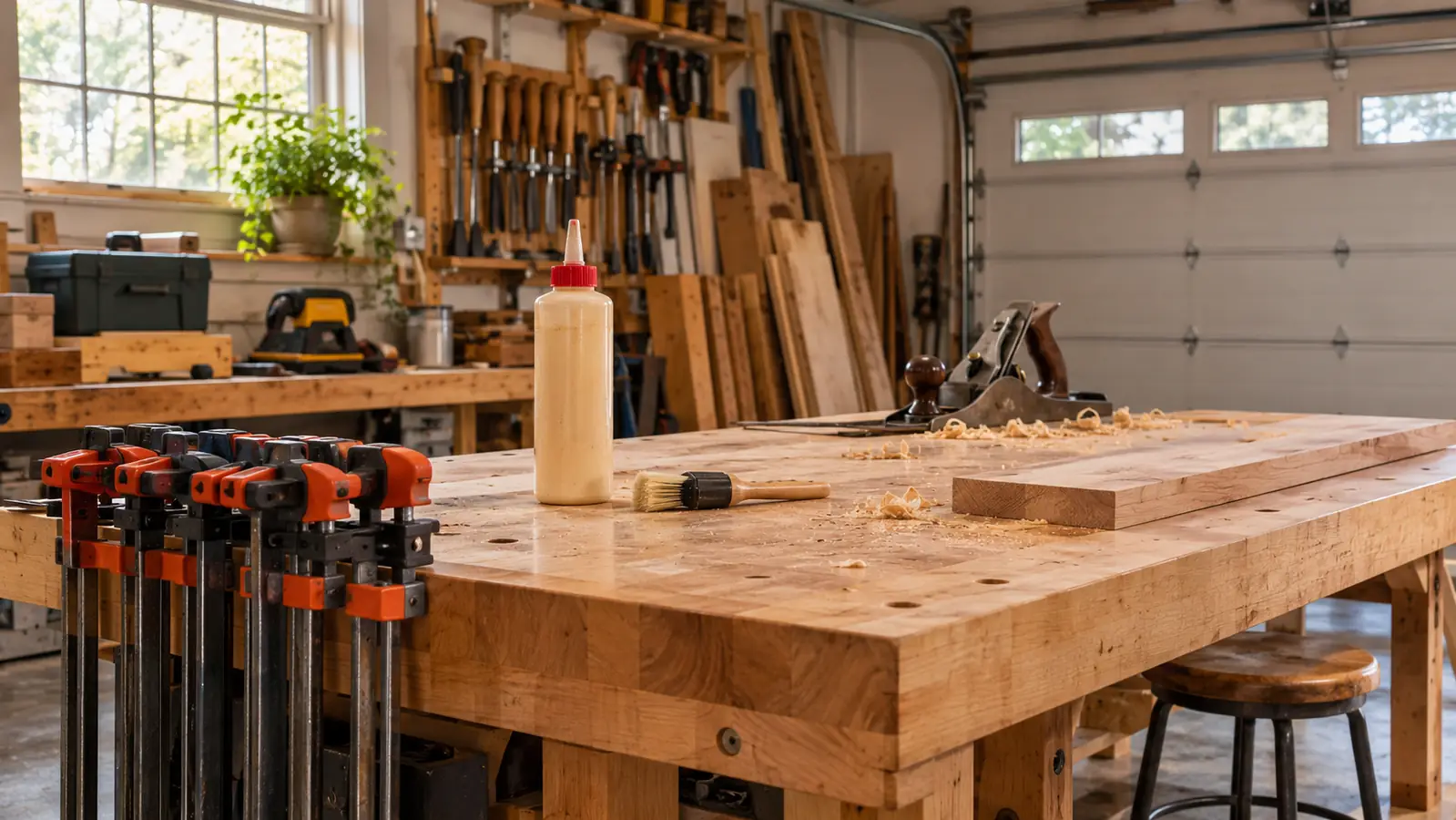
Every joint in this shop gets the same bottle. Shaker end tables, the cherry bookcase, the walnut dining table I built for my wife Marit last winter, cutting boards for Christmas. Titebond III has been that bottle for about twelve years, and I have not found a reason to keep a second glue on the shelf.
I spent 34 years as a finish carpenter, most of it on trim and cabinet installs where a joint that lets go means a call-back. I retired four years ago and build furniture now in a two-car garage outside Boise, where the winters are cold and the shop is unheated. The stakes are lower at home. The standard has not moved. Here is what the glue does for me, in the order it matters.
One bottle that covers every glue-up in the shop
Waterproof, made for interior and exterior work, and approved for indirect food contact. If you are tired of owning three glues to do one job, this is the one that replaces them.
Amazon Check Today's Price on Amazon →It holds a joint through water, so one bottle replaces two
Water is what kills most wood glue joints, and it is why I used to keep two bottles on the shelf. Titebond III is rated waterproof and it is made for interior and exterior work, so the second bottle went away. My cutting boards get washed in the sink and the joints stay closed. The cherry bookcase has been through two Idaho winters with the forced-air heat running and I have not touched a joint on it. One glue, no guessing.
Eight to ten minutes of open time, enough to clamp alone
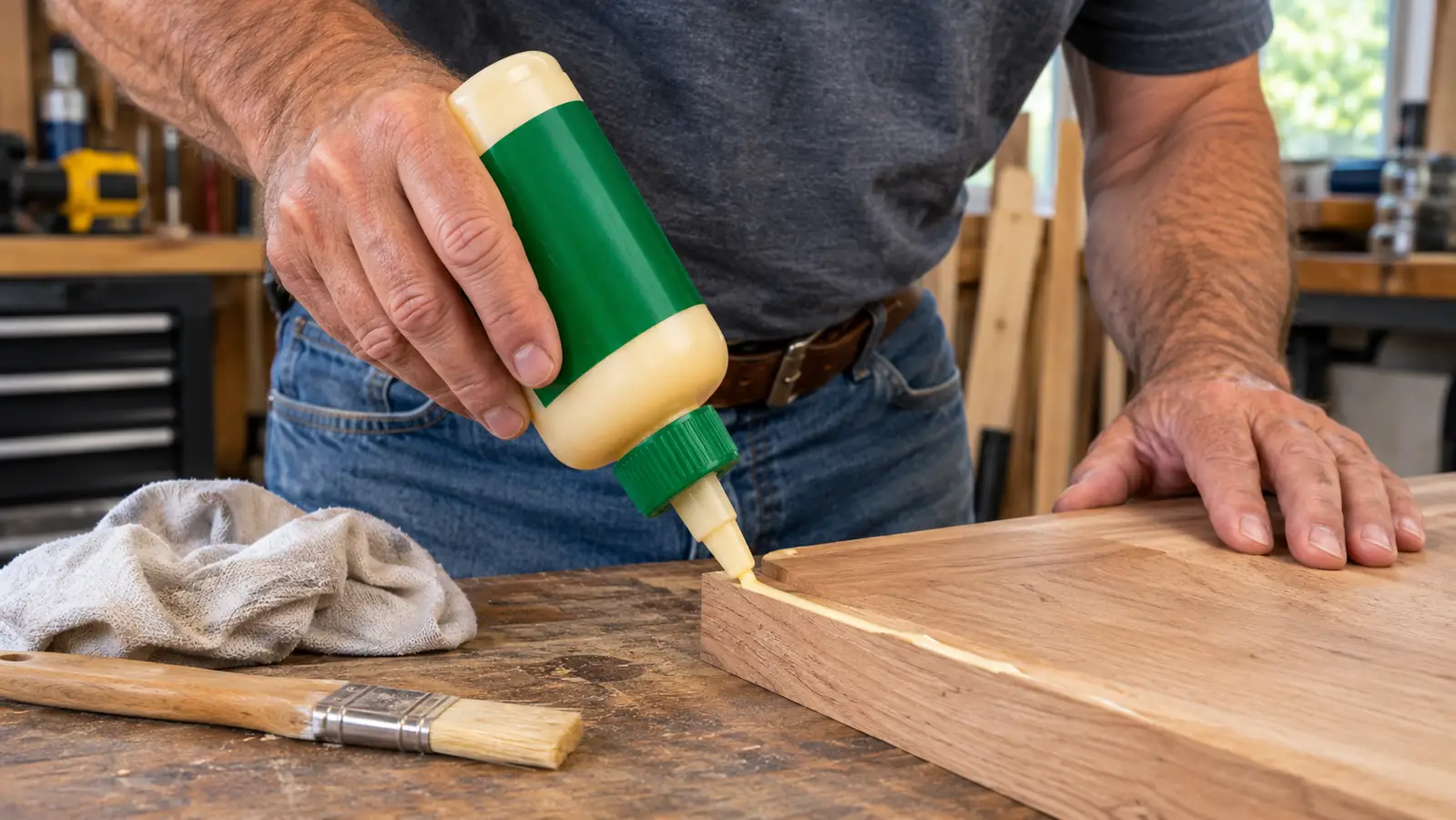
Open time is the number I care about most, because I glue alone. Nobody is on the other end of a panel helping me set a clamp. I get about eight to ten minutes of working time at around 65 degrees, which is enough to spread the joint, set the parts, check the square and get the pipe clamps snug. Not generous, but honest. On a wide tabletop I break the glue-up into stages instead of trying to beat the clock.
Squeeze-out wipes off with a wet rag, not a chisel
Squeeze-out used to be a chore. Polyurethane glue means scraping, sanding and gloves you throw out. Titebond III cleans up with water while it is still wet, so a damp rag takes it off the wood and off my hands and I go back to checking the joint. While wet is the operative phrase. Once it has skinned over you are sanding it. Get the rag out before you walk away.
Approved for indirect food contact, which matters on cutting boards
Cutting boards are most of what I give away at Christmas, and a board is a surface food sits on. This glue is approved for indirect food contact, which is why I stopped hedging about which adhesive to use there. I still run a generous bead, I still clamp flat, and I still let the panel sit a full day before the clamps come off. The approval is one less thing to wonder about.
A 4000 psi joint that outlasts the wood around it
The label rates the cured joint at 4000 psi tensile strength. I have never put a number on a joint in my life, but here is what that means in practice. I trust it on a mortise and tenon, on a bent lamination, and on the apron-to-leg joint of a table people lean on. The wood around the joint fails before the glue line does. That is the whole test as far as I am concerned.
One glue for furniture, repairs and jigs, no shelf debate
Before this, my shelf had a bottle for indoor work, a bottle of polyurethane for anything outdoor, and a tub of something I cannot remember buying. Now there is one bottle of Titebond III and it covers furniture, repairs, jigs and cutting boards. There is real value in not standing in front of the shelf trying to remember which glue is the right glue.
Dries to a light tan that disappears under finish
The cured line comes out a light tan, which matters more than people expect on light woods. It does not show as a dark streak under a clear finish the way some glues do, and on the cherry bookcase it disappeared once the finish went on. I still wipe my squeeze-out, because a glue line is a glue line. But when I miss a spot, the mistake does not announce itself through the finish six months later.
Medium viscosity stays on a vertical joint instead of running
Viscosity is medium, which suits the way I work. Thin enough to spread with a small brush, thick enough that it does not run down a vertical joint and land on the floor while I reach for a clamp. On a drawer side or a stopped dado that matters. A glue that runs is a glue that starves the joint. This one stays where I put it long enough to close things up.
It works in a cold Idaho shop, if you warm it above 47 degrees
Idaho winters are cold and dry and my garage shop is unheated apart from one small electric heater. This glue does not work below 47 degrees. That is not a flaw, it is a fact I plan around. The bottle lives indoors in the house, I warm the shop before I glue anything, I clamp for at least an hour, and I leave the joint 24 hours before it sees stress.
Twelve years of the same result, bottle after bottle
Twelve years, one bottle at a time. I buy a fresh 16-ounce bottle when the old one runs out, which keeps the glue from sitting and going thick in the bottom. Same open time, same clamp time, same result on the end tables this year as on the cherry bookcase two winters ago. Consistency is the whole thing in a hobby shop. Titebond III is why I get to think about the joint instead.
What I'd Skip
Polyurethane glue has its place outdoors in a wet climate, but it foams, it stains your hands, and it is fussy about clamping pressure. For furniture in a dry house it is more work for no gain. Hide glue is a wonderful thing in a repair shop where joints are meant to come apart later, and the wrong choice for someone who wants one bottle that does everything. Epoxy is for gaps and odd joints and it is overkill on a mortise and tenon. And I would skip the quart. Glue that sits for years gets thick and unpredictable. A 16-ounce bottle you actually use up beats a big jug on the shelf.
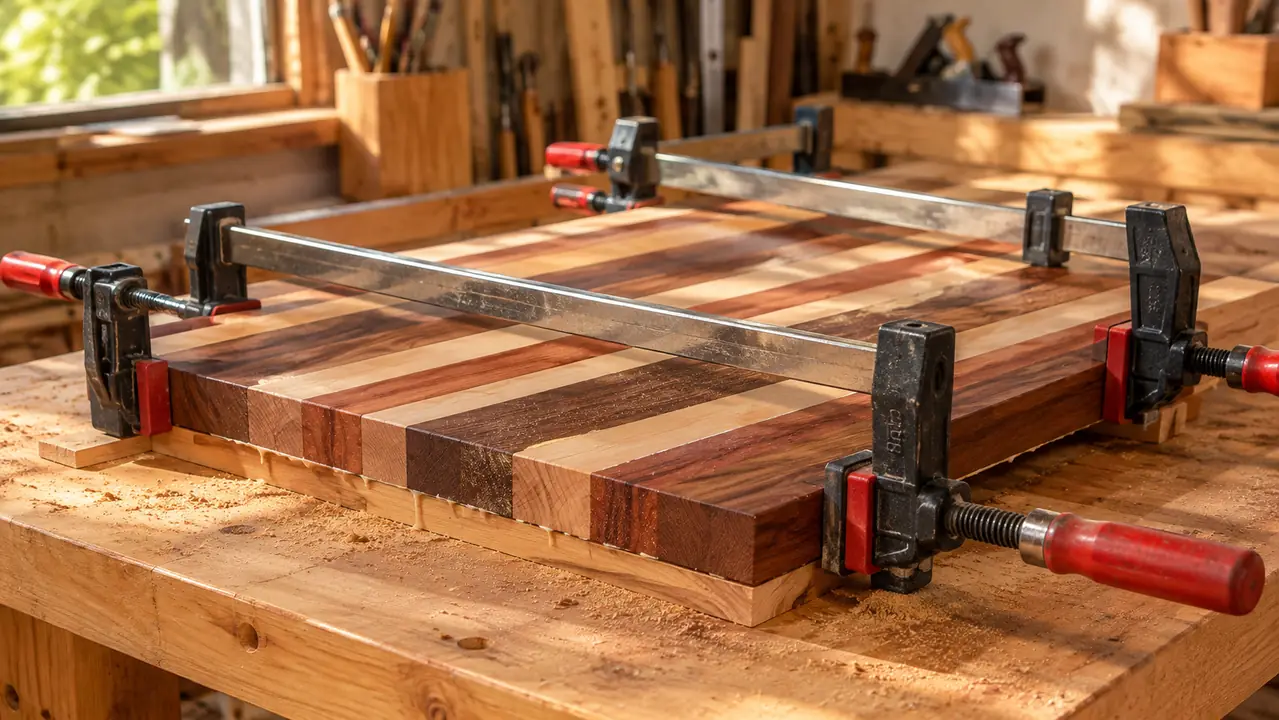
The other thing I would skip is rushing the clamp-up. Most of the joints I have seen fail were starved, not under-glued. People spread a thin film, crank the clamps down hard, and squeeze the glue out of the joint before it can do its job. A firm, even clamp and an hour of patience will do more for you than any change of brand. On a wide panel I use the pipe clamps, I check the panel for square, and then I leave the shop and let it sit.
Clamp for an hour, then leave it alone for 24. I have never had a joint come back on me that got its full day.
Buy the bottle you will actually use up
A 16-ounce bottle, a damp rag and a full day of patience handle almost everything a home shop builds. Start with this one and stop thinking about glue.
Amazon Check Today's Price on Amazon →