

There is a stretch in every glue-up where you have done all you can do. The joints are fitted, the clamps are snug, the squeeze-out is wiped, and now you stand in a cold garage with your hands in your pockets and hope the glue is as good as the joint. I spent 34 years as a finish carpenter and I have built furniture at home for 20, and that wait has never gotten any easier. What got easier is knowing which bottle I reach for. In my shop it is Titebond III, and it has been for about 12 years.
The first cutting boards I gave away as Christmas gifts were glued with Titebond Original, which is a good glue for indoor furniture and was simply what sat on the bench. Hard maple, ripped into strips, glued up, planed flat, finished with mineral oil. They looked right. Then one went home with our kids, got washed the way people actually wash a cutting board, and came back to me a few months later with a seam open along one glue line. Not a crack in the wood. The glue line itself had let go.
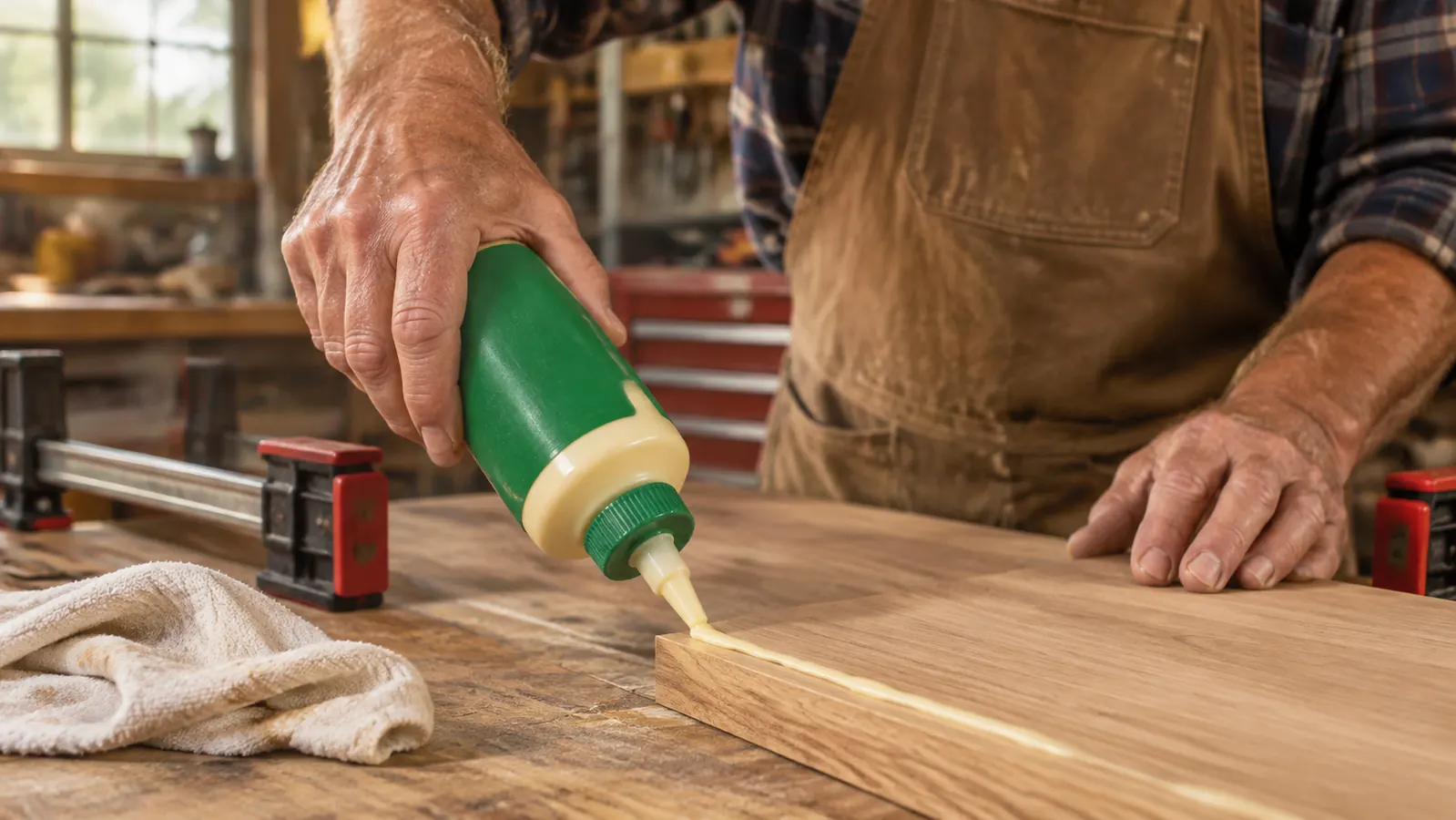
A seam fails like that for one of two reasons. Either the joint was starved and there was not enough glue left in it, or the glue could not take the water. On a board that gets scrubbed and rinsed, it was the water. Titebond Original is not a waterproof glue. Titebond III is. It carries a Type I waterproof rating, the rating meant for exterior exposure, and it is approved for indirect food contact, which is the phrase that matters on anything headed for a kitchen.
So I switched, and I have not had a seam open since. I still fit joints the same way and I still clamp the same way. The difference is that when a board gets rinsed and left on a counter, I am not waiting for a phone call. Twelve years of cutting boards, the walnut dining table I built for my wife Marit last winter, a cherry bookcase, and this year's set of shaker end tables all came together with that same bottle within reach.
The bottle is 16 ounces and it lasts me most of a season of furniture work. It is a medium viscosity glue, which is the shop way of saying it stays roughly where you put it on a vertical face instead of running down onto the floor. I keep a scrap block and a damp rag beside me and I wipe squeeze-out as I go, because this glue cleans up with water while it is still wet. Let it skin over and you are sanding it instead.
The glue line let go, not the wood. That is the failure that teaches you something.
The bottle that never leaves my bench
Titebond III, 16 ounces. Waterproof to the Type I rating, built for interior and exterior work, approved for indirect food contact, and it cleans up with water while it is wet.
Amazon Check today's price on Amazon →Working time runs about 8 to 10 minutes at shop temperature. That is not long when there is glue to spread across a dozen strips of maple, so I lay everything out dry first, in order, and I do a full rehearsal with the clamps open and waiting where I can reach them. Then I glue. Clamps stay on for at least an hour, and the piece sits a full day before I put any stress on it. That is boring advice and it is the part people skip.
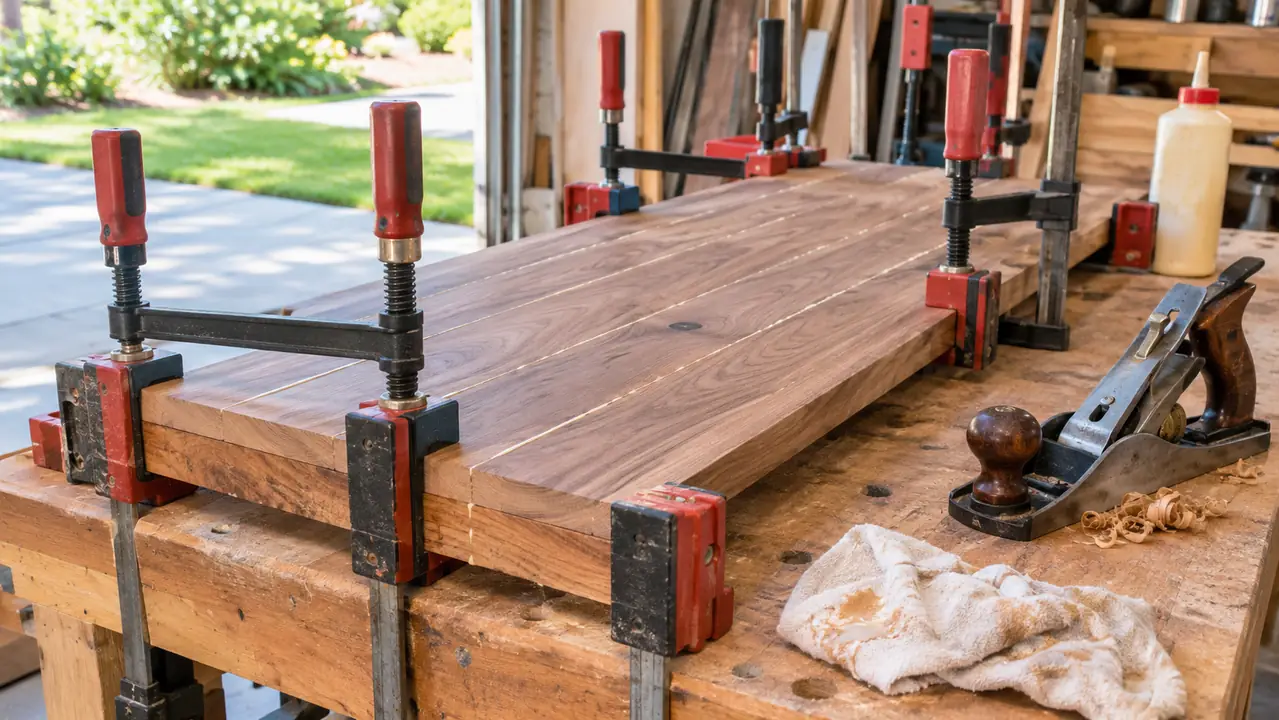
The other part people skip is temperature. This glue does not want to be used below 47 degrees. My garage is unheated apart from one small electric heater, and Boise winters are cold and dry, so from about November on the bottle lives indoors with the finish cans and I warm the shop before any glue-up at all. A joint that never cures properly is not a glue problem, it is a shop problem, but the glue is what gets blamed.
It handles every glue-up I do. The wide panels and tabletops go into the pipe clamps. Drawer parts, small assemblies and jigs go into the IRWIN mini clamps. Cutting boards get glued, planed, sanded and oiled and handed out at Christmas. It is also the only glue in the shop I would trust on something that lives outdoors, and that is not a sentence I could have written about the bottle I used before I switched to Titebond III.
What it will not do is rescue a sloppy joint. It is a medium viscosity glue, not a gap filler. If the fit is loose, the glue line becomes the weakest thing in the piece and it will announce itself later, usually after the finish is on. I pare and chop my joints with the Narex chisels, lay them out with the IRWIN square, and dry fit until the joint closes with hand pressure. The glue's job starts after that.
What I'd Tell You If We Were Sitting at My Kitchen Table
I would tell you that a wood glue is not where you should be clever. Buy one good bottle, learn how it behaves in your shop at your temperatures, and stop thinking about it. For me that bottle is Titebond III, and the reason is not that it makes a stronger joint than everything else on the shelf. The reason is that it is waterproof, approved for indirect food contact, and forgiving enough that a hobbyist working alone in a garage can get a clean glue-up without a second set of hands. Practice dry clamping, keep the shop above 47 degrees, leave the piece alone for a day, and the glue will do its part. The rest of it is still your joint.
One bottle, every glue-up in the shop
If you keep a single wood glue on the bench, this is the one I have kept for about 12 years. Sixteen ounces, waterproof, and it wipes up with water before it sets.
Amazon See Titebond III on Amazon →