
Short answer first, since that is what I would want if I asked you across the bench. Titebond III is the glue I keep in the shop and the one I would hand you if you were building a cutting board, a table that lives on a porch, or anything that might see a wet glass set down on it. Gorilla Wood Glue is a good interior glue and it does two things better than the bottle I use. Neither is a bad choice. They are aimed at different jobs, and once you see where the line falls you stop wondering which one to buy.
I spent 34 years installing trim and cabinets for a living and I have been building furniture in a two car garage outside Boise for 20 years, including a walnut dining table for Marit last winter. Titebond III has been on my bench for about 12 years, one 16 ounce bottle at a time. Gorilla Wood Glue I used on job sites years before that, on interior trim returns and small repairs where a waterproof glue was not called for. So this is not a comparison I read up on. It is two bottles I have actually run out of.
| Titebond III | Gorilla Wood Glue | |
|---|---|---|
| Water resistance | ANSI Type I, the waterproof rating | Water resistant, not rated for constant exposure |
| Indirect food contact | Approved for indirect food contact | The bottle I had carried no such claim |
| Working time | About 8 to 10 minutes before it skins over | Felt shorter in my hands on wide panels |
| Clamp time | At least an hour, 24 hours before stress | Always clamped it overnight out of habit |
| Glue line on light wood | Dries a light tan that can show on maple and ash | Dries closer to the wood and blends better |
| Vertical glue-ups | Medium viscosity, it will run down a face | Thicker, stays where you put it |
| Tensile rating | 4000 psi | No figure I can quote, and no joint of mine has failed |
| Cleanup | Water while the glue is wet | Water while the glue is wet |
| Best for | Cutting boards, exterior work, anything washed | Interior furniture, repairs, jigs |
| Buying it | Woodworking supplier or online, one 16 ounce bottle at a time | On the shelf at the hardware store in town |
How I Compared Them
There is no lab in my garage. What I have is a bench, a stack of offcuts, and 34 years of watching other people's glue lines fail. So here is the honest version of how I compare these two. Both bottles sit on the same shelf. When a job comes up that either one could handle, I use the one that suits it and I pay attention to how it behaves: how it spreads, how fast it skins over, whether it runs down a face, and what the joint looks like when it comes out of the clamps.
The cutting boards I make as Christmas gifts are the closest thing to a test I run. They get scrubbed, soaked, and left sitting wet in a dish rack. A glue line that is going to give up does it there, in a kitchen, not in a shop. Titebond III has held on every board I have given away. That is not a lab result. It is 12 years of boards coming back to me at Christmas still in one piece.
The other half of it is memory. I used Gorilla Wood Glue for years on job sites before Titebond III became the bottle I kept. I know how it spreads and how it sets. What I have not done is run a break test on identical blocks with both bottles, and I would be careful about anyone who tells you they have. Two glues that both exceed the strength of the wood around them do not settle much in a vise.
Where Titebond III Wins
The first difference decides most arguments. Titebond III carries an ANSI Type I rating, which is the waterproof classification. Gorilla Wood Glue is water resistant, and that is a different promise. Water resistant means a damp rag and the odd splash. Waterproof means the joint is rated for water and expected to come back from it. If the piece is a cutting board that goes in the sink, a bench that sits on the porch, or anything Marit might wipe down without asking me first, the choice is made before we get to anything else.
The second is food contact. Titebond III is approved for indirect food contact, which is the phrase that matters when you are gluing up something a knife is going to work on. Indirect contact means the glue is not touching the food directly, but it is in the piece, and I would rather the bottle carry the approval than guess at it. That one line is the reason I stopped using anything else for cutting boards.
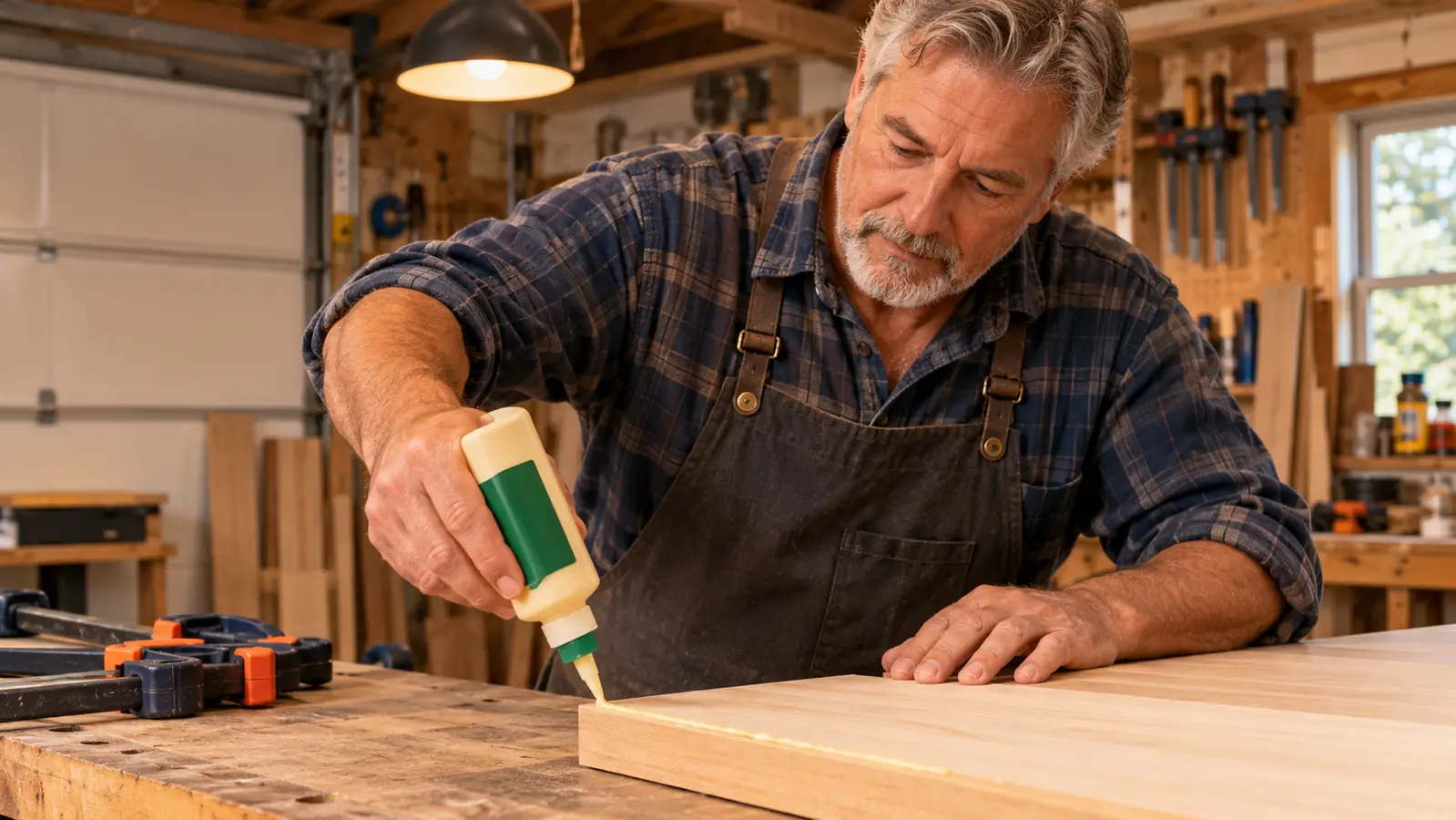
The third is how it behaves in the clamps. I get about 8 to 10 minutes of working time, which is enough to spread a panel and get the pipe clamps on without hurrying. I clamp for at least an hour and leave the joint alone for 24 hours before I put any stress on it. The bottle rates at 4000 psi tensile, and while I have no way to check that in my shop, I can tell you I have never had a Titebond III joint come apart on a piece that left the bench.
Where Gorilla Wood Glue Wins
Start with the one that costs me time rather than strength. Titebond III dries a light tan. On walnut and cherry that disappears into the wood and nobody notices. On maple, ash, or a pale cutting board, a tan glue line can read as a shadow down the joint, and once the finish goes on it is not coming out. Gorilla Wood Glue dries closer to the tone of the wood and blends better on light stock. If I built nothing but maple end tables, I would keep a bottle of it just for that.
The second is consistency. Gorilla Wood Glue is thicker and it sits where you put it. On a vertical glue-up, a face frame or a repair with the piece standing on end, that matters. A medium viscosity glue will start to run, and then you are chasing a drip down the face with a rag while the clock runs. Titebond III is medium viscosity and it will run on you if you get careless. I have learned to lay the work down whenever I can, but if you cannot lay it down, the thicker bottle is easier to live with.
The third is that you can get it anywhere. Saturday morning, halfway through a project, out of glue, the hardware store in town has Gorilla Wood Glue on the shelf. That is worth something when the other option is waiting on a delivery. I buy a new bottle of Titebond III when the old one runs out, so it is rarely a problem here, but for someone building a first project in a hurry it can be the thing that decides it.
What Both of Them Get Right
Here is what gets lost in these arguments. Both of these are wood glues that, done right, produce a joint stronger than the wood beside it. Break a well glued maple joint and the wood fails before the glue line does. That is true of either bottle. So if you are choosing between them, you are not choosing between a good joint and a bad one. You are choosing between two glues that handle different conditions.
Both clean up with water while the glue is wet, so a rag and a bucket solve the squeeze-out problem either way. Both sand without clogging a belt immediately, provided you let them cure. Both will fail if you starve the joint, spread glue on one face only, or clamp so lightly that the two surfaces never come into real contact. Most glue failures I have seen in other people's work were not the glue's fault. They were a dry joint, a cold joint, or a joint that got moved before it set.
The other thing both bottles want is a good fit. A tight joint with a little glue beats a loose joint packed with it, every time. If the gap is wide enough that you can see it, you are not gluing anymore, you are filling, and neither of these is the right product for that.
Twelve years of cutting boards coming back to me at Christmas still in one piece. That is the only test result I trust.
The bottle that goes on anything headed for the kitchen sink
ANSI Type I waterproof, approved for indirect food contact, and about 8 to 10 minutes of working time. It is the glue I have bought for 12 years, one 16 ounce bottle at a time.
Amazon Check Today's Price on Amazon →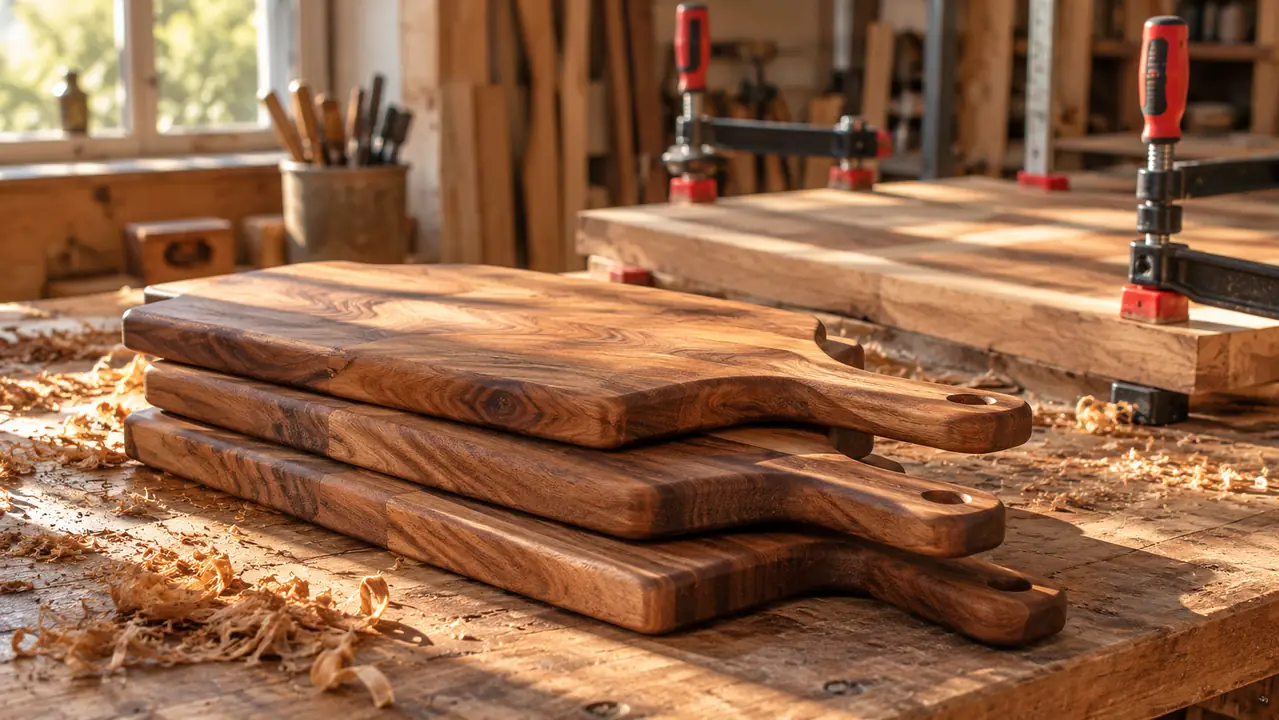
The Cutting Board Question
Cutting boards come up more than anything else, so they get their own section. A board is the hardest life a glue joint has in a house. It gets scrubbed, soaked, left wet in a rack, and the end grain joints are asked to hold through all of it. I build them every year as Christmas gifts, mostly maple with a strip of walnut through the middle.
Titebond III is the only glue I have used on a board in the last 12 years. The waterproof rating and the food contact approval are the two reasons, and neither one has a substitute in the other bottle. I spread it thin, I get glue on both faces, and I clamp with the pipe clamps, because a board is a panel and my mini clamps are for drawer parts and jigs.
What I would not do is hand someone a board glued with a water resistant adhesive and tell them it is fine. It might last. It might last years. But I would be the one who made it, and the gap between the two ratings is not worth that on a gift.
A Cold Shop and a Warm Bottle
Neither label explains temperature well enough. Titebond III does not want to be used below about 47 degrees. My garage is unheated apart from one small electric heater, and Boise winters are cold and dry. From about November on, the glue comes into the house, sits on a shelf in the utility room, and comes back out when the shop is warm enough to work in. A cold bottle makes thick glue, and thick glue does not spread or soak in the way it should.
I cannot tell you whether Gorilla Wood Glue is more forgiving in a cold shop, because the shops I used it in were heated. What I can tell you is that the rule applies to any wood glue. If your hands are cold, the glue is cold, and the joint will not be what it should be. Warm the shop first, then glue.
The same goes for leaving a bottle in the garage over winter. I have done it, and I have thrown out a bottle that went lumpy after a hard freeze. Now the bottle lives indoors and the heater gets the shop to something reasonable before I open it. That habit costs nothing and it saves a glue-up.
Who Should Buy Which
If you build cutting boards, anything that lives outdoors, or anything that gets washed, buy the Titebond III. That covers most of what I do. It is the bottle I would hand a new woodworker without a second thought, because it removes a whole category of failure from the list and the food contact approval means you are not guessing when somebody asks whether the board is safe to cut on.
If you build interior furniture, small repairs, and jigs, and you want a bottle you can pick up on a Saturday morning, Gorilla Wood Glue will do the job. It blends better on light wood and it stays put on a vertical joint. I would not talk you out of it. I would only say to keep a bottle of Titebond III as well, because sooner or later somebody will ask you to build them a cutting board.
One bottle for the jobs that get wet
Waterproof, approved for indirect food contact, 16 ounces, and a working time that gives you room to get the clamps on. Buy it before you need it.
Amazon Check Today's Price on Amazon →