
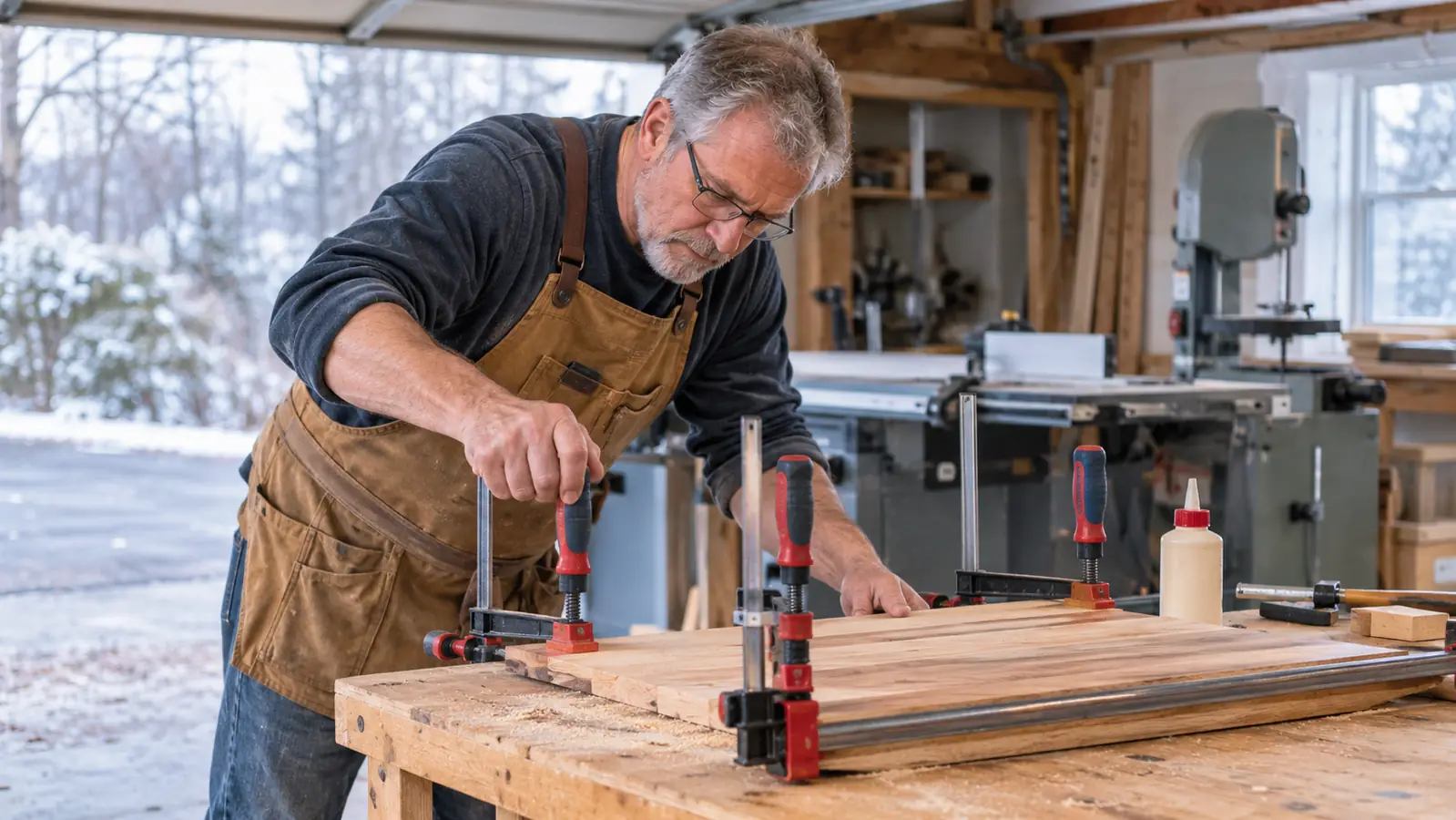
I have been gluing wood since I was a boy, and I spent thirty-four years getting paid to do it as a finish carpenter. Four years retired now, working out of a two-car garage outside Boise with a small electric heater and a concrete floor that stays cold from November to March. In all that time I have lost maybe six joints that mattered. Every one of them was a joint I rushed or a joint I clamped badly. Not one of them was a joint where the glue itself let go. Titebond III has been the bottle on my bench for about twelve years, and this is my honest accounting of what it does and what it will not do.
People ask me what glue to buy the way they ask what oil to put in a truck. They want one answer and they want it short. So here is the short answer, and then I will spend the rest of this page explaining why. Titebond III is the glue I reach for on every assembly in this shop, from a cutting board for one of our kids at Christmas to the walnut table I built for Marit last winter. It is not the fastest glue and it is not the cheapest. It is the one I trust to still be holding in ten years, which is the only test that has ever mattered to me.
The Quick Verdict
Twelve years of bottles, one glue-up after another, and not a single joint in this shop has opened on its own. Waterproof, water cleanup, and enough working time to actually get the clamps where they belong.
Amazon Check Today's Price →The Bottle That Has Held Every Joint in My Shop for Twelve Years
Sixteen ounces, waterproof rated, approved for indirect food contact, and it cleans up with water while the joint is still wet. If you are going to keep one wood glue on the shelf, keep this one.
Amazon Check Today's Price on Amazon →How I've Used It
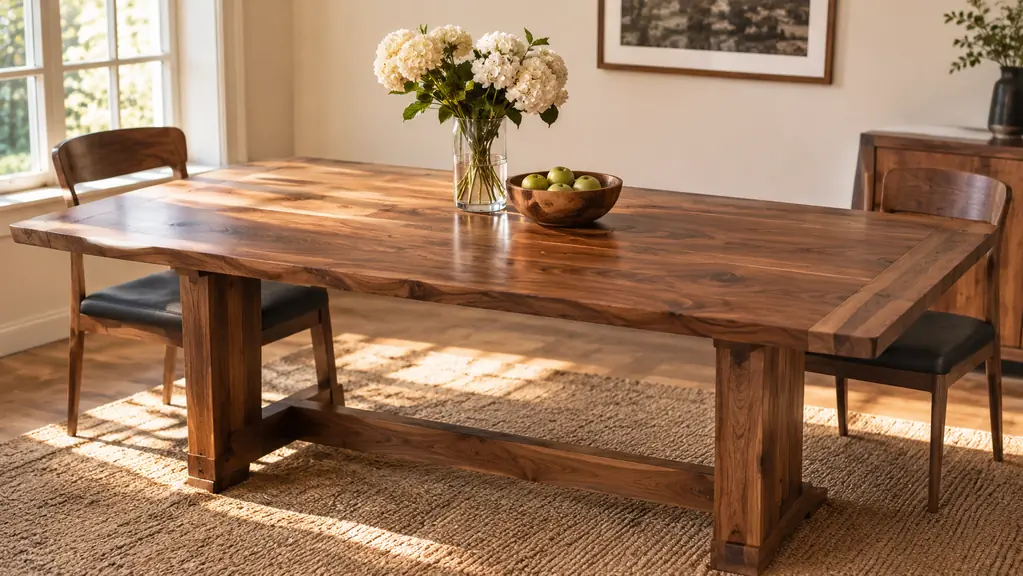
Twelve years works out to roughly six bottles, because a 16-ounce bottle lasts me most of a year and I buy a new one when it runs out rather than waiting for anything. In that stretch it has glued the cherry bookcase that has stood in the living room for two winters, the walnut dining table Marit asked for, the shaker-style end tables I am finishing this year, and every cutting board I have given away at Christmas. It has also glued the things nobody sees, jigs and shop fixtures and a wobbling kitchen chair that one of our kids hauled over on a Sunday afternoon.
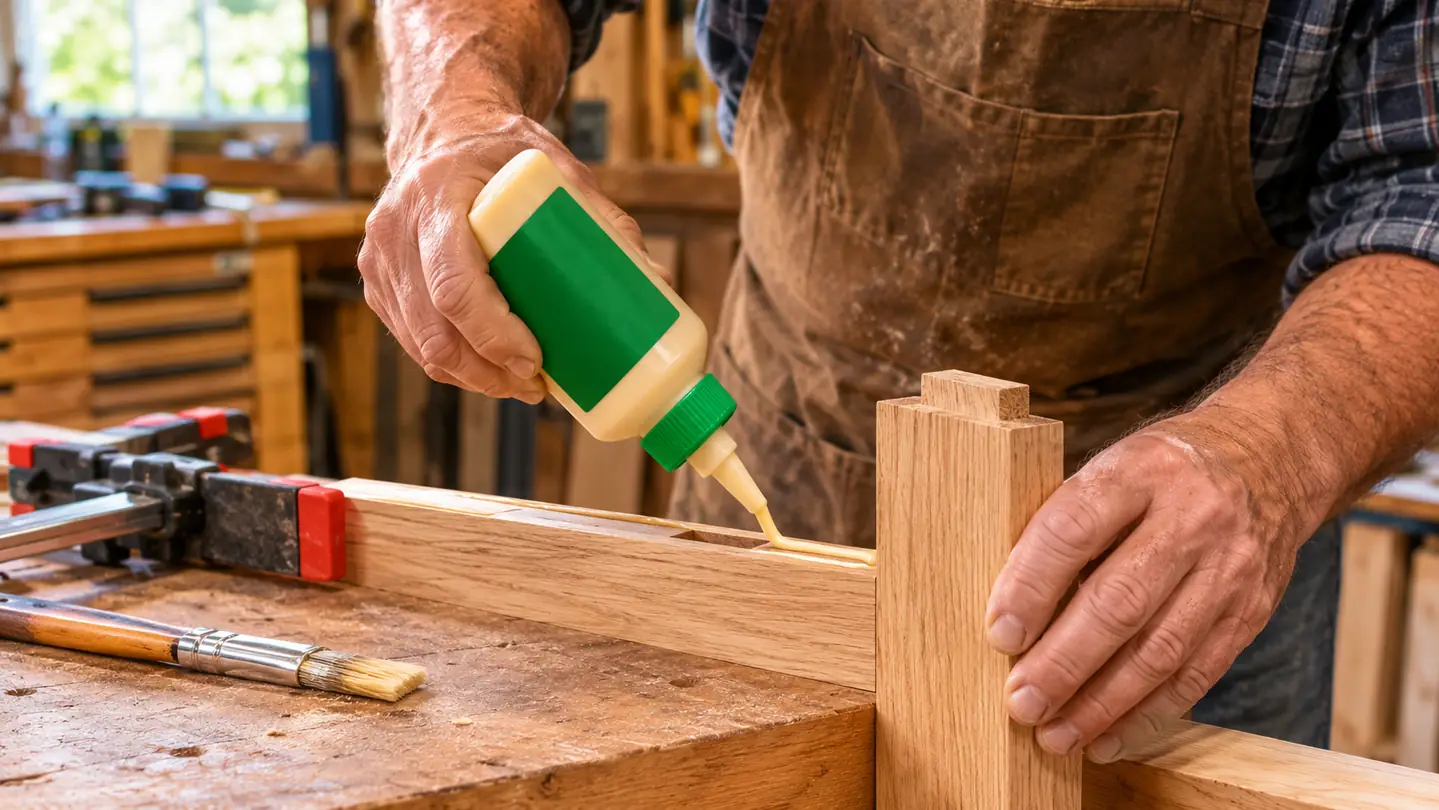
The routine does not change from project to project. I dry fit first, every single time, because glue does not fix a bad fit, it just hides one until the clamp comes off. Then I lay a thin bead on one face and spread it with a finger or a scrap of card stock so the whole face is covered and nothing is running. Thin bead, full coverage. A puddle does nothing except make a mess and starve the joint line when the pressure comes on.
Clamping is where most people go wrong, and it is where I went wrong for years. It does not take a lot of pressure. It takes even pressure, and it takes enough clamps that the joint line does not open anywhere along its length. On a wide panel I use the pipe clamps, four or six of them, alternating over and under. The mini clamps handle drawer parts and jigs and nothing bigger than that. On a tabletop I want a pipe clamp every eight or ten inches and I want them snug, not crushed, because you can starve a joint by overtightening just as easily as by using too little.
Working Time Is the Whole Story
Here is the thing I would tell anybody starting out. Glue does not fail on you inside the joint. It fails on you in the thirty seconds between laying the bead and getting the clamps where they belong. I get about eight to ten minutes of working time out of Titebond III in a shop that is sitting around sixty degrees. That sounds generous right up until you are gluing a six-board tabletop by yourself with one pair of hands.
Ten minutes is plenty for a small assembly when the dry fit is behind you. It is not enough for a wide panel if you are also hunting for a clamp, or nudging a caul back into place, or straightening a pipe that has rolled. So I do a full dry run with every clamp already in position and opened to the right width before a drop of glue comes out of the bottle. That is not a trick the glue does for you, that is just woodworking. But the open time is what sets the clock, and this glue's clock is honest.
Once the clamps are on, I leave it alone for at least an hour. I do not sneak a look. I do not wipe a drip and put pressure on the joint while I am doing it. The whole assembly sits overnight, and I do not put any real stress on it for a full twenty-four hours. That part is not negotiable for me no matter what anybody tells me at a hardware counter. Every joint I have ever lost, I lost by being impatient at this exact step.
Waterproof and Food Contact, Where the Claim Earns Its Keep
Titebond III is rated waterproof, and it is approved for indirect food contact. Those two lines on the label are the entire reason it is the glue I use for cutting boards. A cutting board gets washed. It gets soaked and left sitting wet on a counter and put away still damp. A glue that softens when it takes on water is a glue that hands you a board splitting along a glue line in February, and you will not know it until somebody is cutting an onion on it.
I have boards in my own kitchen that are years old and have never opened. Not one. I use the same bottle on anything that lives outdoors or in a garage that swings between dry and damp, which is most of what I build these days. Interior and exterior both, one bottle, no second product to keep on the shelf and forget about until the day you need it and cannot find it.
The food contact rating is for indirect contact, which is exactly what a cutting board is. It is not a claim that you should eat the stuff, and I would not want anybody reading this to think otherwise. Wash the board, let it dry, oil it now and then, and the glue line is doing its job in a place where a fair number of other glues have no business being.
The Cold Shop Problem
My shop is a two-car garage with a concrete floor and one small electric heater that I move around depending on where I am standing. In January it is cold out there. Cold is the one condition where this glue will let you down. Titebond does not want to be used below about 47 degrees. Under that it goes thick, it stops flowing the way it should, and it does not soak into the wood fibers the way it needs to for a joint that lasts.
So in winter the bottle lives indoors. It sits on a shelf in the mudroom and I carry it out when I am actually ready to glue, which sounds like a fuss and is not. I also run the heater for a while before I start, and I bring the boards in the night before so they are not cold to the touch. Glue on cold wood is a bad bet no matter what the label says, and I learned that the expensive way on a small end table I had to cut apart and redo.
This is the one thing I would flag to anybody with an unheated shop. It is not a defect in the glue, it is a limit of the glue, and once you know where the limit is you just work around it. Warm the shop, warm the wood, warm the bottle, and it behaves the same in January as it does in June. Ignore all three and you will get a joint that looks fine and lets go in a year.
Twelve years of bottles, four years retired, and not one joint in this shop has opened on its own. The glue is the part of the work I stopped worrying about.
What It Doesn't Do, and What I Used Before It
It is not a gap filler. If your joint has a visible gap in it, glue will not bridge that gap and hold it. Medium viscosity is what you want on a vertical face, because the glue stays where you put it instead of running down onto your shoes, but that same body means it will not swell up and fill a sloppy shoulder. Fit the joint first. This bottle is the last step in the process, not the repair at the end of it.
Cleanup is water while the glue is still wet, and that is a genuine convenience, not a marketing line. A damp rag takes the squeeze-out off in a couple of passes. Once it skins over you are scraping with a chisel, and once it cures you are sanding, and sanding around a glue line on an open-grained wood is how you end up with a blotchy finish that shows every place you got careless.
Before Titebond III I used Titebond Original for years, and I still keep a bottle of it for interior work where I want a longer open time and water is not a concern. On job sites years ago I used Gorilla Wood Glue, and it did the job it was asked to do, but I did not care for how it behaved in a cold truck and I did not care for the cleanup as much. That is not a knock on it. It is just an honest note that I stopped reaching for it once I had something I trusted more.
One more complaint, and it is a small one. The tip clogs. Every bottle of wood glue I have ever owned clogs at the tip between uses, and this one is no exception to that rule. I keep a stiff piece of wire in the bench drawer and clear it before every glue-up, and I store the bottle upright so it does not set up in the cap. That is ten seconds of annoyance. It is not a reason to buy something else.
What I Liked
- Waterproof rated, so it holds on cutting boards and on anything that lives outdoors or in a damp garage
- Cleans up with water while the joint is still wet, which saves you sanding around a glue line later
- Approved for indirect food contact, which is what a cutting board actually is
- About eight to ten minutes of working time in a sixty degree shop, enough to clamp a small assembly without panic
- One bottle covers interior and exterior work, so there is no second product to keep on the shelf
- Every glue-up in my shop for twelve years, and nothing has come apart on its own
Where It Falls Short
- Will not bridge a gap. Fit the joint properly or it will not hold
- Close to useless below about 47 degrees, so an unheated shop means carrying the bottle indoors in winter
- The tip clogs between uses, like every wood glue I have owned
- Squeeze-out has to come off while it is wet or you are scraping and sanding
Who This Is For
This is for the person who wants one bottle of glue on the shelf and wants to stop thinking about it. If you build furniture, if you repair furniture, if you make cutting boards as gifts, if you are gluing up a panel and you want to know the joint will still be there ten years from now, this is the bottle. It suits a beginner because the working time is forgiving and the cleanup is water, and it suits somebody who has been at this for decades because it does not ask anything of you that you were not already going to do anyway.
It also suits a small shop with no room for five specialty adhesives. One bottle, sixteen ounces, interior and exterior, food safe enough for a board, and it will sit on the shelf for a year between projects without turning into something you cannot use. That last part matters more than people admit. I have thrown out more half-used containers of things I bought for one job than I care to count.
Who Should Skip It
Skip it if your shop sits below 47 degrees all winter and you are not going to warm it or bring the bottle inside. You will get a joint that looks fine and fails later, and you will blame the glue for it. Skip it if you are trying to close a joint with a visible gap in it, because nothing in this bottle will do that for you. And skip it if all you ever glue is interior trim in a heated room, because Titebond Original costs less, gives you more open time, and handles that job without complaint.
I keep both bottles, and I expect I always will. But if I could only keep one, it would not be a close call, and it would not take me ten seconds to decide.
One Bottle, Twelve Years, No Failed Joints in This Shop
Warm the shop, dry fit first, clamp it evenly, leave it overnight. That is the whole method. The glue is the part you should not have to think about.
Amazon See Today's Price on Amazon →