
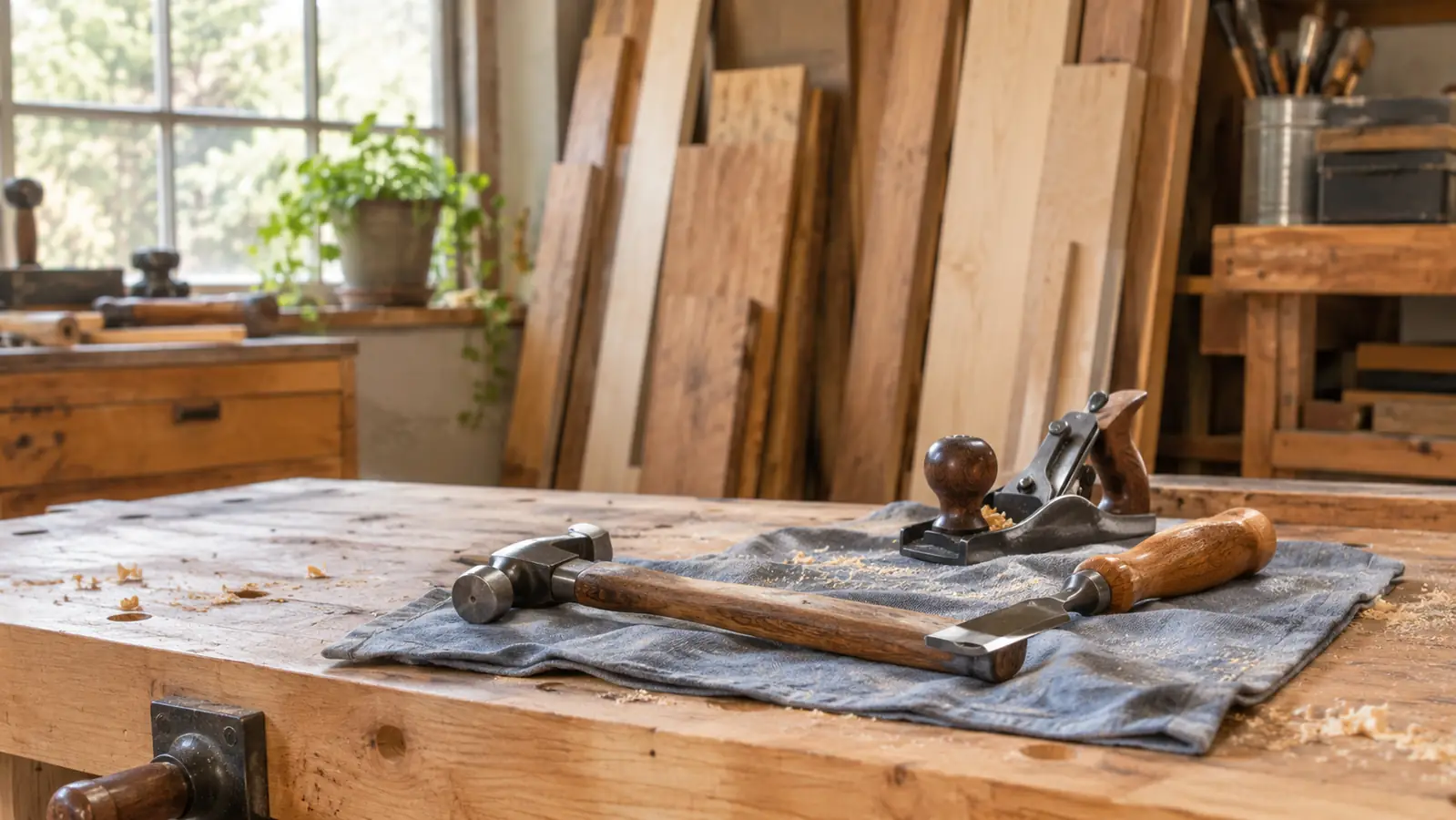
The IRWIN combination square has been sitting on my bench for three years now. I bought it in the first winter after I retired, along with a set of chisels and a pack of small clamps, because I was tired of walking out to the garage and reaching for the same beat-up tools I had carried on job sites for 34 years. A clean start on the hand tool side of the shop. That was the plan.
Three years later I have a fair amount to say about it, and not all of it is flattering. It is a good square. It is not a perfect square, and there are two or three things about it nobody mentions in the reviews you read before you buy. If you are building furniture in a home shop and wondering whether this is the one, here is the honest version.
The Quick Verdict
A genuinely accurate 12-inch square that earns its place in furniture layout. The etched scale is the best thing about it and the finish on the body is the worst.
Amazon Check Today's Price →The square I reach for on every furniture layout
12-inch stainless steel blade, metal body, black etched scales in 1/16 inch graduations, marks 90 and 45 degrees. Three years on my bench and still true.
Amazon Check today's price on Amazon →How I've Actually Used It
I want to be clear about what this square has done in my shop, because the honest review depends on it. It has not framed a house. It has not set a string line or laid out a stair stringer on a job site. My career in trim and cabinet installs is over, four years done, and what is left is a two-car garage with a concrete floor, one small electric heater, and a maple bench I built myself.
What the IRWIN has done in those three years is every bit of furniture layout. It marked the joinery on the cherry bookcase two winters ago. It laid out the mortises and the leg tapers on the walnut dining table I built for Marit last winter. It has been on every shaker-style end table and every cutting board I have given away at Christmas. Not a glamorous life for a square, but a demanding one, because furniture joinery is less forgiving than trim. A trim joint out of square by a thirty-second gets hidden by a shadow line. A table apron out of square by a thirty-second shows up as a rock.
And here is the thing that surprised me, coming off job-site tools. I expected to want a bigger square for the table work. Twelve inches of blade turned out to be right. It reaches across an apron and still sits flat on a narrow leg without wanting to tip. The 12.4 inch length and 5.51 inch width are in the specs and they read like a spec sheet, but what they mean in practice is a tool that fits the work I do now.
The other job it does, the one I did not expect to lean on so hard, is transferring a measurement. Set the blade where you want it, tighten the nut, and the same setting comes off one leg and onto the next one identically. I spent most of my career measuring twice with a tape and hoping. A sliding blade locked at a setting is a different kind of confidence. It is not a machinist's gauge and it does not pretend to be, but for pulling a shoulder line off one piece and laying it on three more, it does the work.
The 45 degree function gets less use than the 90. I will say that plainly. Miters on furniture are rare in my shop, and when I do cut one I usually reach for the table saw sled. But the 45 has earned its keep on chamfers and on the occasional picture frame jig, and I am glad it is there even if it sits idle most weeks.
What Nobody Tells You Before You Buy
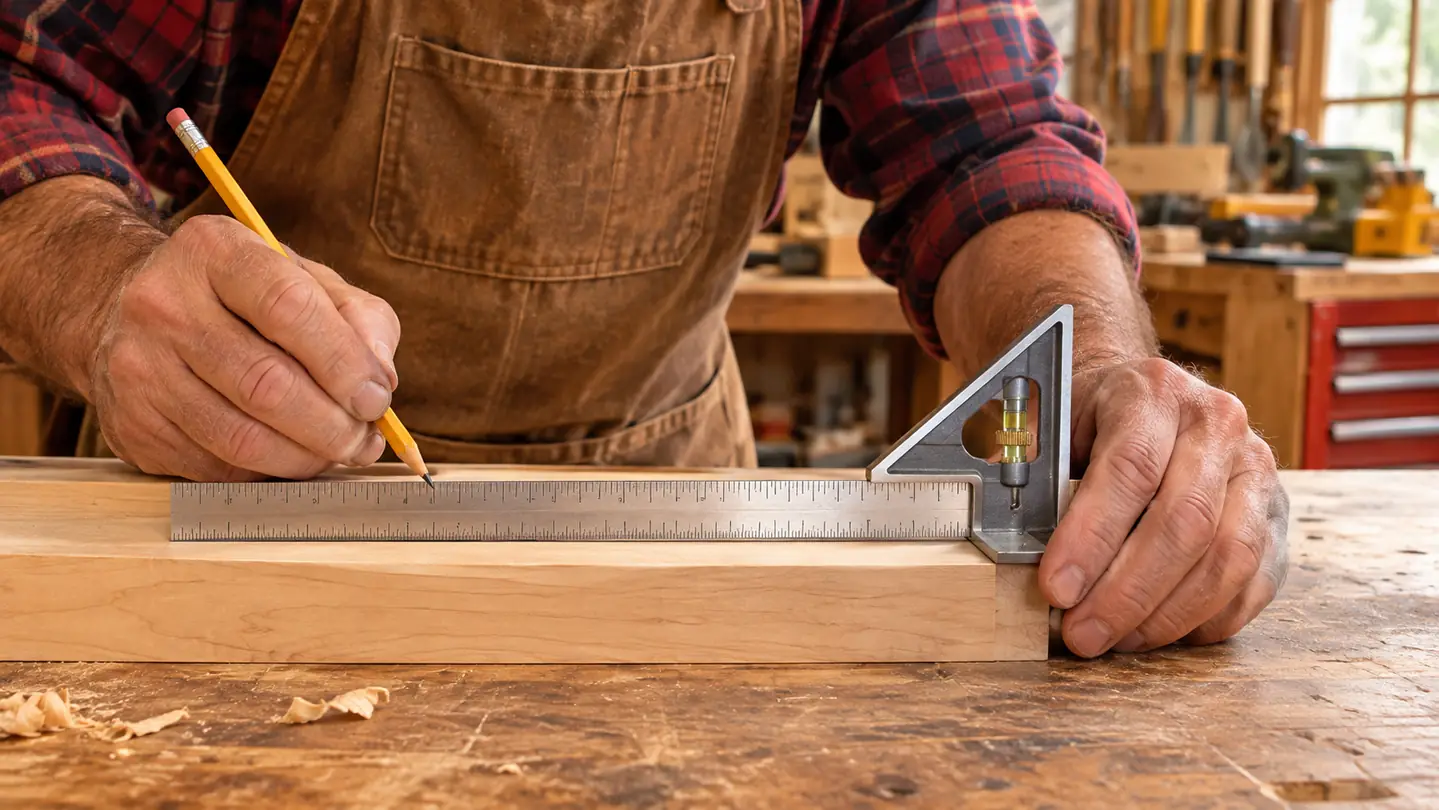
Start with the scale, because it is the part that actually matters and the part that gets the least attention. The graduations are etched into the stainless blade, not printed on. Black precision-etched scales in 1/16 inch graduations, per the listing. Etching is the difference between a tool you own for twenty years and a tool you own for four. Printed scales rub off at the point where your thumb sits, which is always right where you need to read a number. Three years of thumb traffic on this blade and the marks are as crisp as the day it came out of the package.
Now the part nobody tells you. The scale reads beautifully in good light and it reads poorly in bad light. Black etching on bright stainless is high contrast when there is daylight coming in the garage door. Under the one bare bulb over my bench on a January afternoon, it is a squint. I have learned to mark with the overhead light on and the door open, and if I am working late I bring a task light over. A matte blade would be easier to read. It would also rust, so I understand the tradeoff, but you should know you are making it.
Second thing nobody mentions: the body edges. Mine arrived with a very slight burr along one edge of the metal body. Not a defect exactly, just the reality of a part at this level. It was enough to leave a faint scratch on a piece of cherry when I slid it along the face, which is the kind of thing that ruins your afternoon on a finished surface. Ten minutes with a fine stone and a light touch took the burr off and it has never come back. Do that the day the square arrives, before it touches good lumber.
Third: the knurled nut that locks the sliding blade. It works. It locks the blade firmly and it has never slipped mid-mark in three years. But it is a small nut and my hands are 61 years old with some arthritis in the thumb joint. On a cold morning in an unheated garage, that nut is fiddly. Gloves make it worse. I have gotten into the habit of setting the blade where I want it, locking the nut, and then doing all my marking for that operation before I change it, rather than sliding it back and forth the way I would with warm hands.
What I Liked
- Dead square out of the package, confirmed with the flip test against the table saw top
- Black 1/16 inch graduations are etched into the blade, still crisp after three years of daily thumb traffic
- Sliding blade locks hard and has never slipped mid-mark
- Metal body has enough weight to sit still on a board while you mark
- Marks 90 and 45 degrees and works as a depth and transfer gauge, so two other layout tools stayed in the drawer
Where It Falls Short
- Slight burr on one body edge out of the package that needed a few passes with a stone
- The scale is hard to read under a single bare bulb, it wants real light
- Knurled locking nut is fiddly in cold hands
- Blade spots in a cold shop if you put it away without a wipe
- No case or holder included, so you have to make one or hang it
A trim joint out of square by a thirty-second gets hidden by a shadow line. A table apron out of square by a thirty-second shows up as a rock.
Accuracy, Tested the Only Way That Counts
You can read reviews all day and never learn whether a square is actually square. The test takes two minutes. You put the body against a known straight edge, mark a line along the blade, then flip the square over and mark the same line from the other side. If the two lines are one line, the square is true. If they diverge, the square is off and no amount of pulling on the blade will fix it.
I did that test the week the IRWIN came into the shop, on the cast iron top of my contractor table saw, which is as flat a reference as I own. It came out true. I have repeated the test twice since, once after a winter where the shop got cold enough that I worried about it, and once last fall before I started the end tables. True both times. That is not a guarantee about every square in the box, but it is three data points on the one I own, and it is more than most reviews give you.
There is a limit worth stating. This is a carpenter's square, not a machinist's square. It is accurate enough for furniture layout and it is not accurate enough for setting up a metal lathe. I have never called it machinist grade and I would not, and if that is what you need, you are shopping in the wrong part of the catalog. For wood, where a thousandth of an inch is a fantasy and a sixty-fourth is a fine joint, this square is more than sufficient.
What I Compared It To
Before this square I did all my layout with a tape and a speed square, the same way I had since I was an apprentice. The speed square is still on the bench and still earns its place breaking down a board or checking a crosscut, but it cannot slide. It cannot transfer a setting from one piece to another. It cannot be set to a depth and used as a gauge. Those jobs came into my shop the winter I bought the IRWIN, and I have not gone back to the speed square for furniture work since.
The other comparison is the old hardware store square I carried for years. I still have it in a drawer. It is not true anymore, and I doubt it was ever as true as I assumed. I laid out plenty of trim with it and got away with it because trim forgives. Furniture does not. If you have an old square and you have never flipped it against a straight edge, do that tonight. You may find out that the gaps you have been blaming on your saw were never the saw.
Where It Falls Short
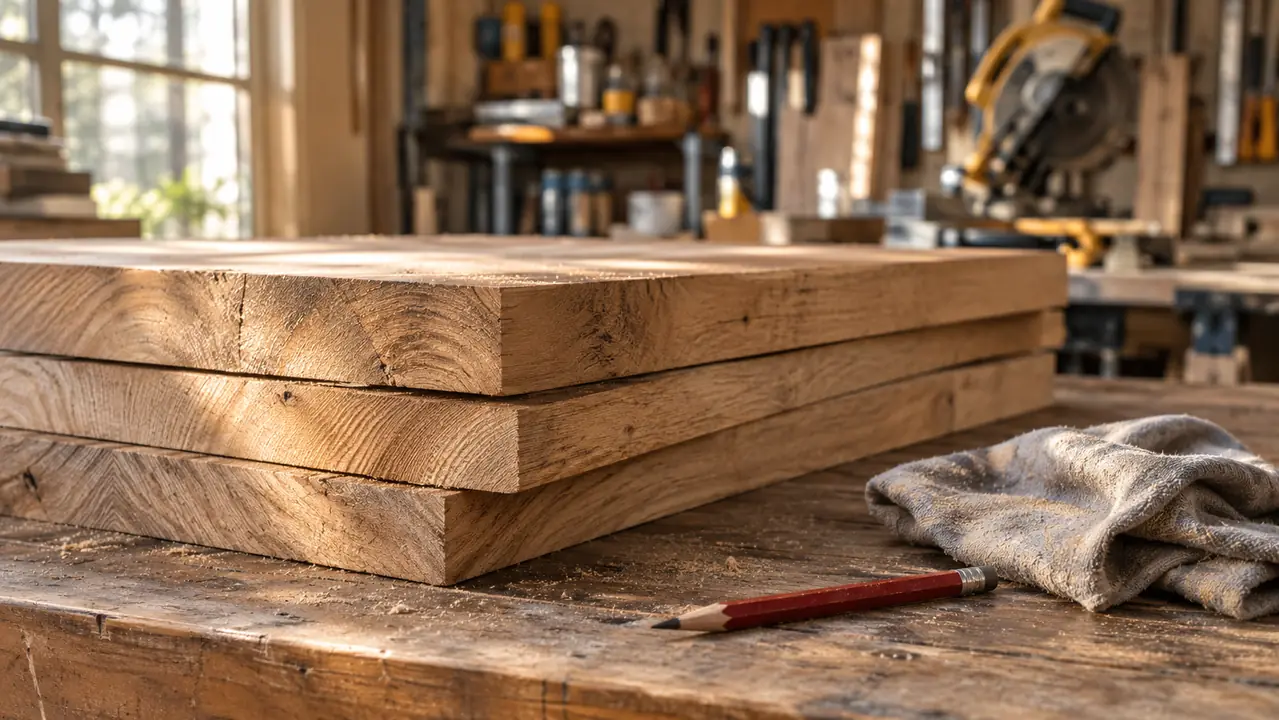
The finish. The stainless blade is rust proof in the sense the listing claims, and after three years there is no rust on mine. But it will spot. A cold dry garage in an Idaho winter still gets condensation on steel when the heater comes on, and I have found small water spots on the blade after a cold snap. They wipe off with a rag and a drop of oil. They do not come off if you ignore them for a season. I keep a lightly oiled rag in the bench drawer and give the blade a wipe when I put it away in winter. That is maintenance the listing does not mention and you should plan on it.
The body has held up fine and I have no complaints about its strength. It is not going to win any beauty contest. It has a couple of dings in it from being dropped on the concrete floor, which is a thing that happens, and the dings have not affected the accuracy. The 14.4 ounce weight is heavy enough to feel substantial without being tiring to hold through a long layout session.
And the last one: there is no case. It arrives in packaging and that packaging goes in the bin, and then the square lives loose in a bench drawer with a marking knife and a pencil, which is not ideal for any measuring tool. I made a simple holder for mine out of an offcut, which took an hour. If you are not going to make one, at least give it a hook on the wall so it is not rattling against chisels.
Who This Is For
If you are setting up a home shop and you have been getting by with a tape and a speed square, this is the tool that ends that. It does the job the speed square cannot do, which is hold a setting and carry it to the next piece. Once you have laid out one project that way, going back feels like working with one hand behind your back.
It also suits anyone who has been fighting a cheap combination square that will not hold its setting or will not read true on the flip test. The difference between a square that is off by a degree and one that is dead true is the difference between joinery that closes and joinery you have to fix with a plane. If you have been blaming your technique for gaps, check your square first. It may not be you.
And it suits the person who wants one square rather than four. The 90 and the 45, the sliding blade for depth, the etched scale for marking. That is a lot of layout work in one 12-inch tool that lives in a drawer and comes out every time you have a board on the bench.
Three years, two flip tests, still dead square
12-inch stainless steel blade, metal body, black etched scales in 1/16 inch graduations, marks 90 and 45 degrees. The square that handles all my furniture layout.
Amazon See today's price on Amazon →Who Should Skip It
If you are doing rough framing, skip it. A combination square is the wrong tool for laying out a wall and you will wreck the blade prying something loose within a month. Buy a framing square and a chalk line and leave this one on the bench where it belongs.
If you need machinist tolerance, skip it. This is a woodworking square and it says so in everything but the words. If a thousandth matters on your work, you want a machinist's square with a hardened blade and a properly ground body, and you will pay for it in both money and fuss.
And if you are the kind of person who will not wipe a blade down once in a while in a cold shop, skip it, or at least accept that you are going to have spots on the steel. The tool rewards a little care and it punishes neglect the way every good steel tool does. That is not a flaw. It is just what steel is.
The Honest Verdict
Three years in, the IRWIN combination square is the tool I would buy again if this one walked off. That is the cleanest test I know. It is accurate, it has stayed accurate, the etched scale has held up to three years of daily thumb traffic, and it has outlasted every other layout tool in the drawer.
The complaints are real but they are small. A burr that needed ten minutes with a stone. A scale that wants good light. A knurled nut that fights cold hands. Spots on the steel if you ignore it in winter. None of those are reasons not to own it. All of them are reasons to know what you are buying before it arrives, which is the entire point of an honest review.
If you are building furniture in a garage and you want one square that does the layout work and does it true, this is a good one. Check it on arrival with the flip test, take the burr off the body edge, and give the blade a wipe of oil in the winter. Do those three things and it will outlast your interest in the hobby.
The one square left on my bench after three years
Accurate, etched, and still true on the flip test. If you are setting up a home shop, this is the layout tool to start with.
Amazon Check today's price on Amazon →